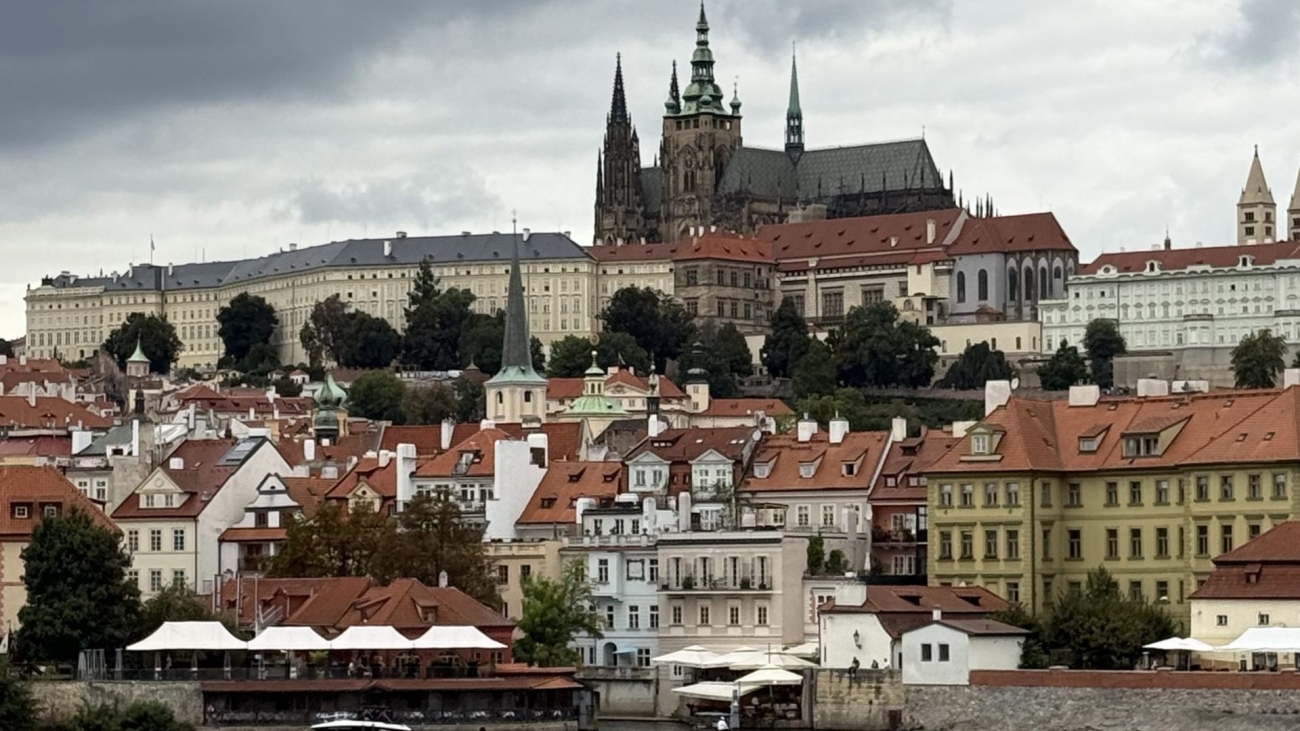
This Czech city is best known for Charles Bridge and Prague Castle. Both are true must-see attractions, but the country’s largest city and capital shouldn’t be reduced to just those two sights. There’s so much more to discover.
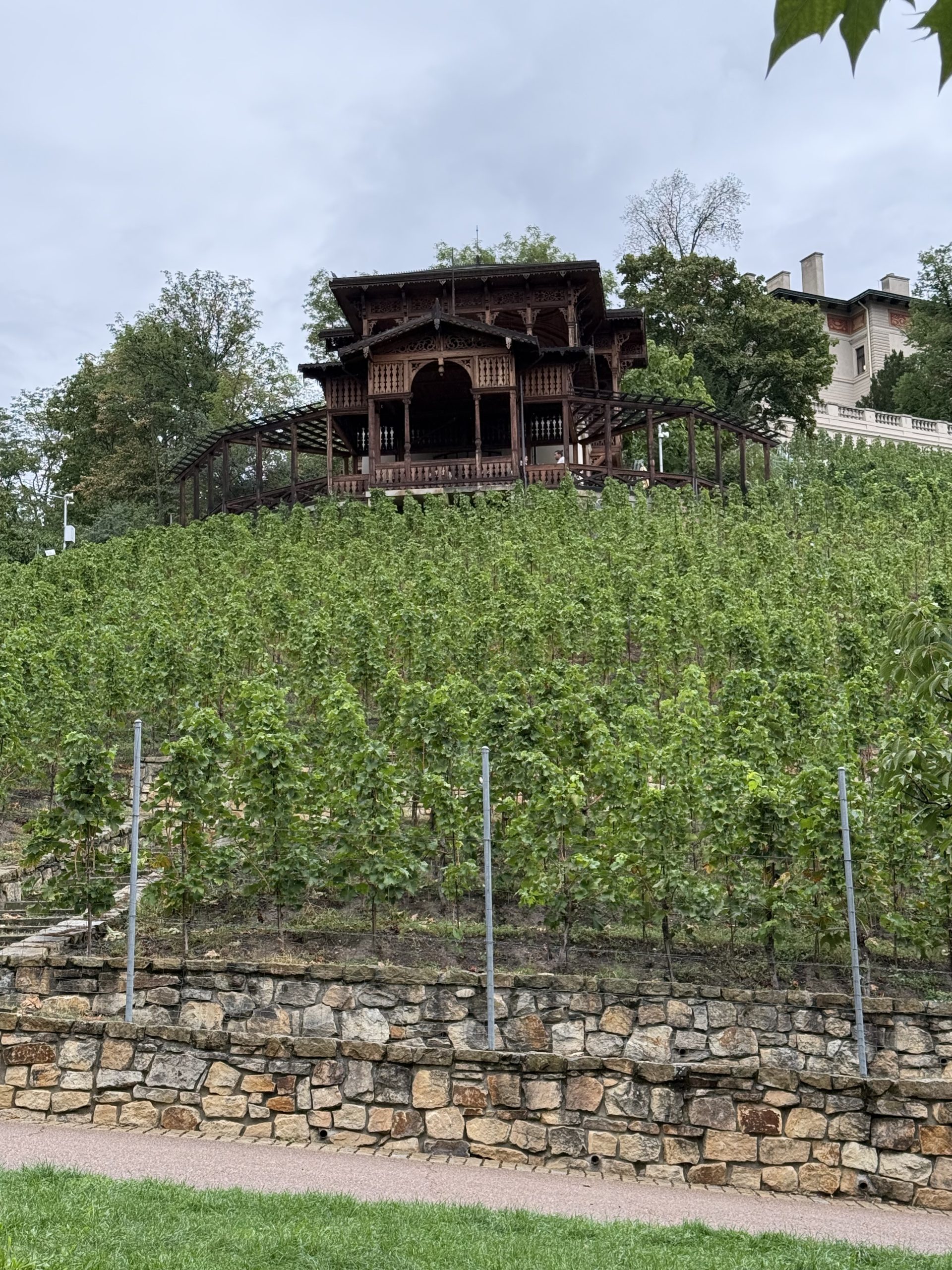
It starts to drizzle as I arrive at Havlíček Park by tram. After walking a few meters up a hill, I experience my first “I didn’t expect that” moment. It would be one of many. A winery —right in the middle of the park! Vines stretch up the small hill to an impressive building. Here, you can savor the fermented fruits of the winemakers’ labor while enjoying a view of the city. But that wasn’t the purpose of my trip. Across the park—actually, already at the other exit—lie the“Prague Caves.”
Not "terrible" at all
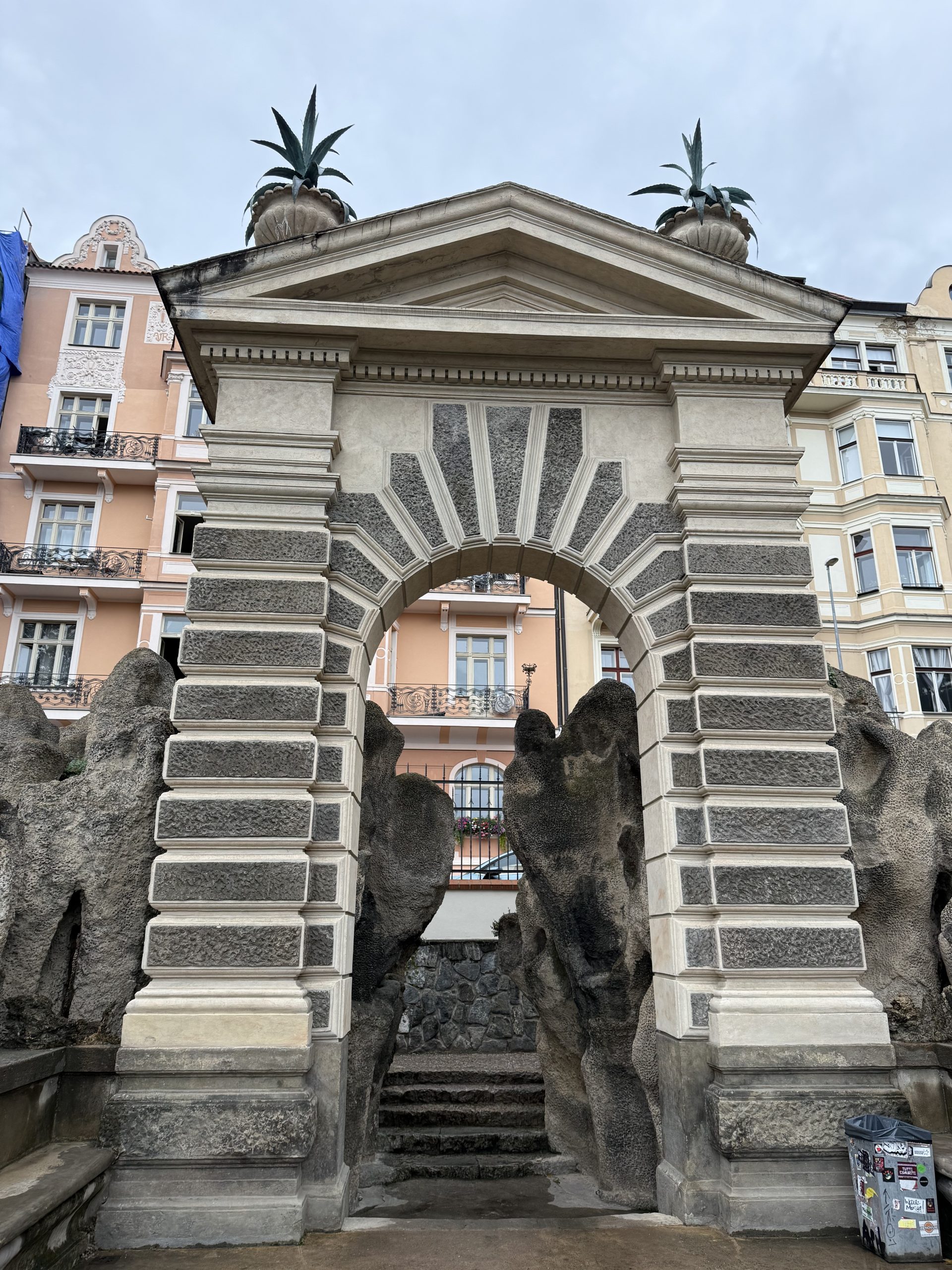
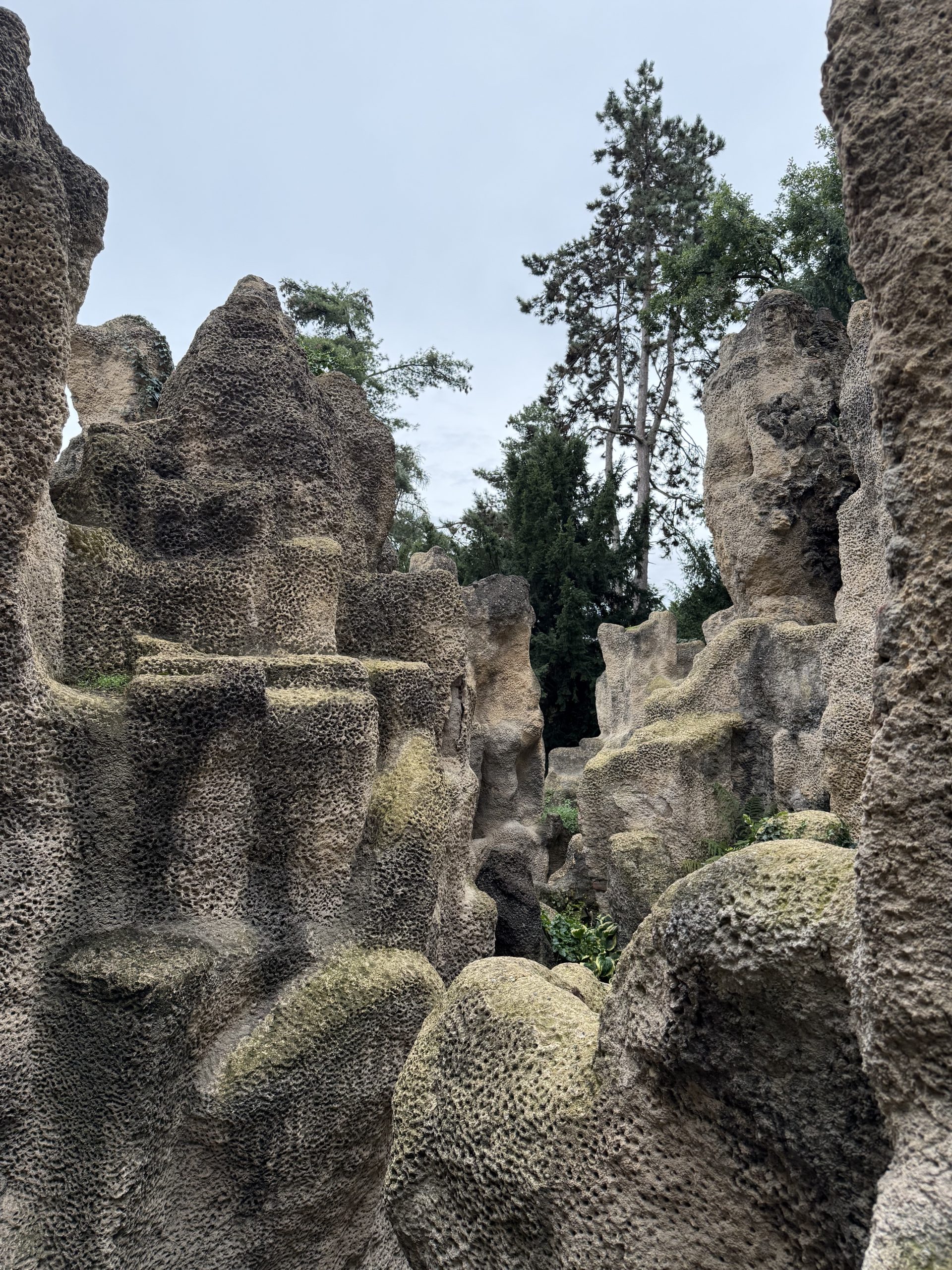
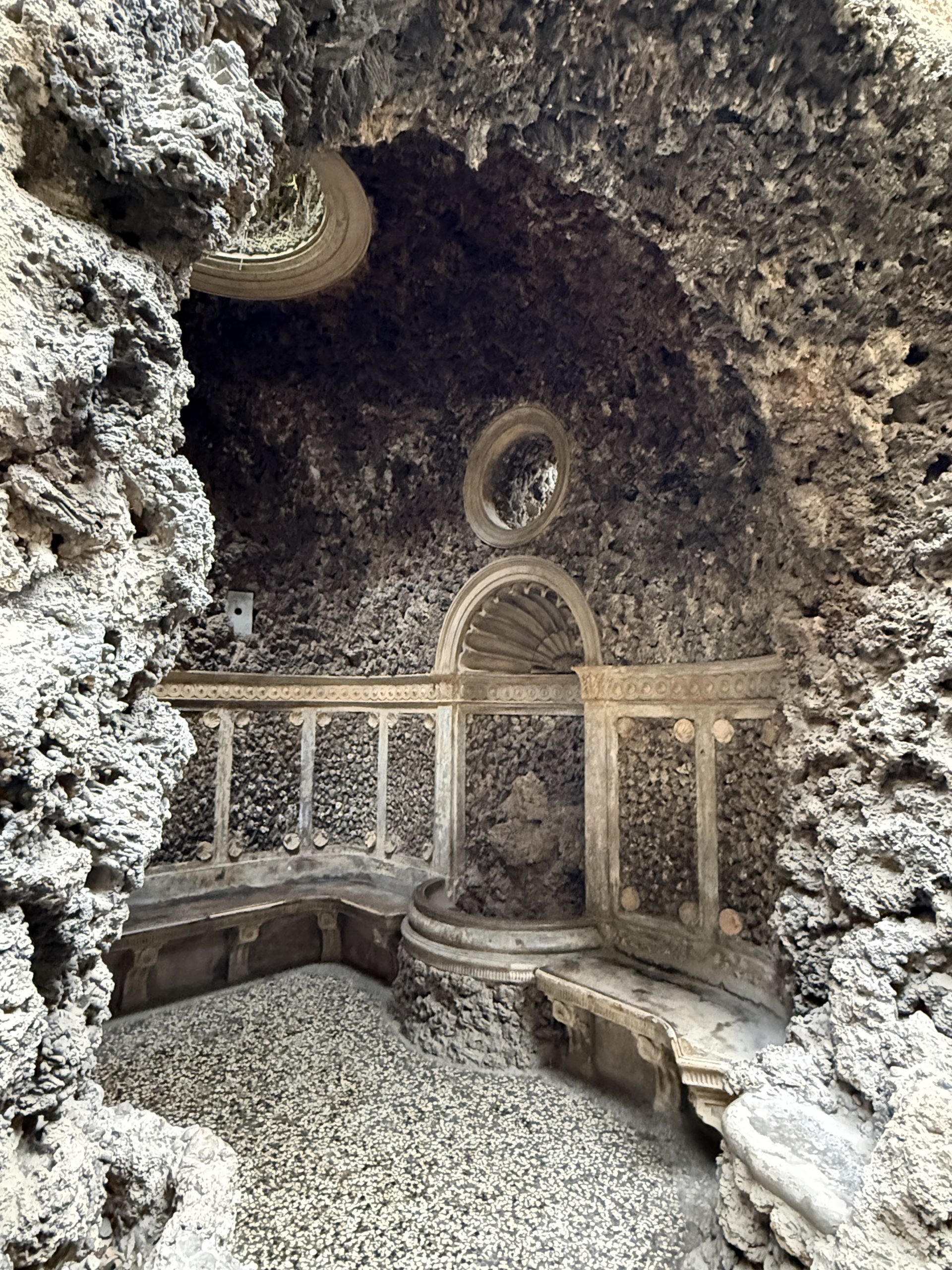
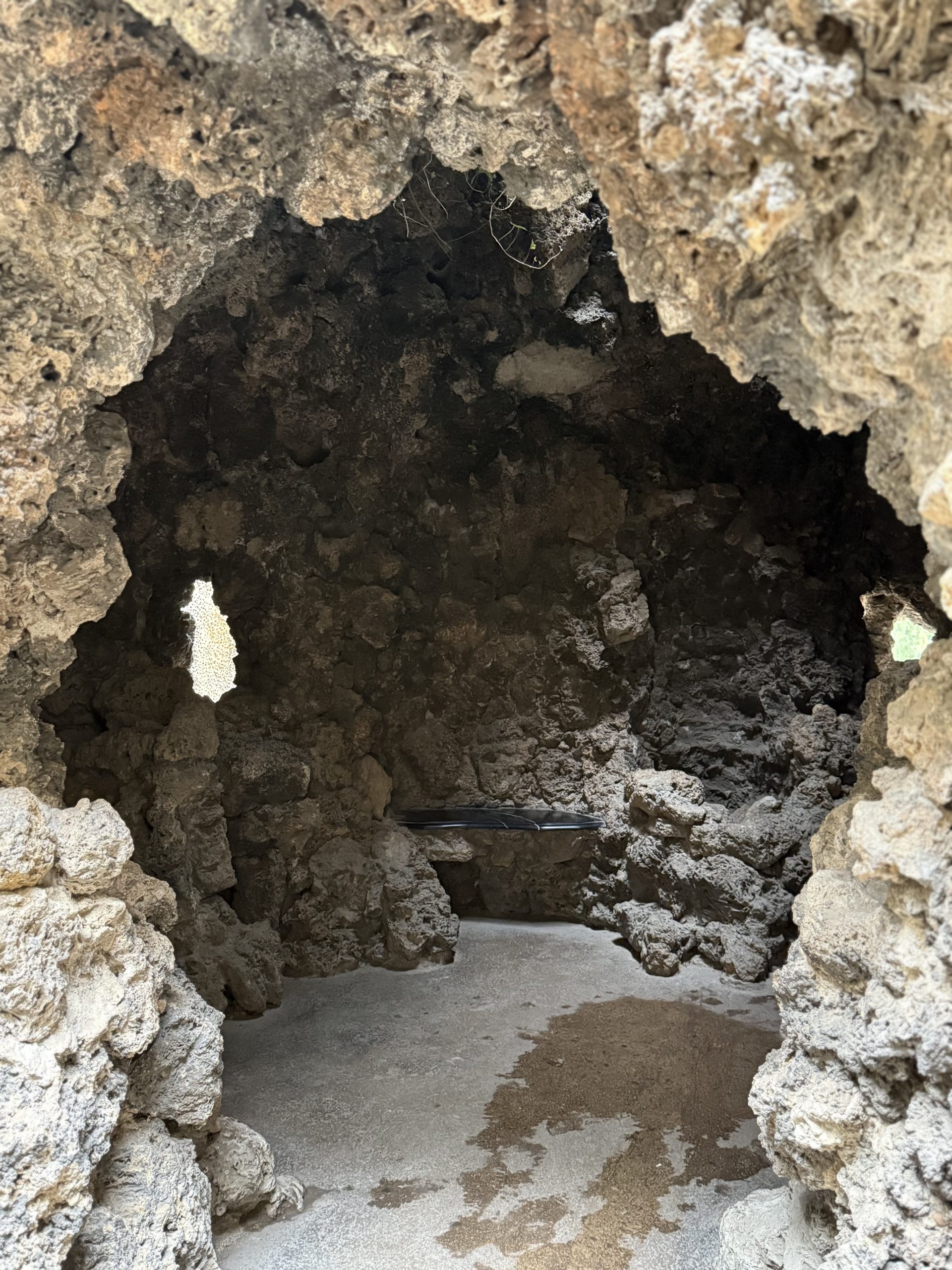
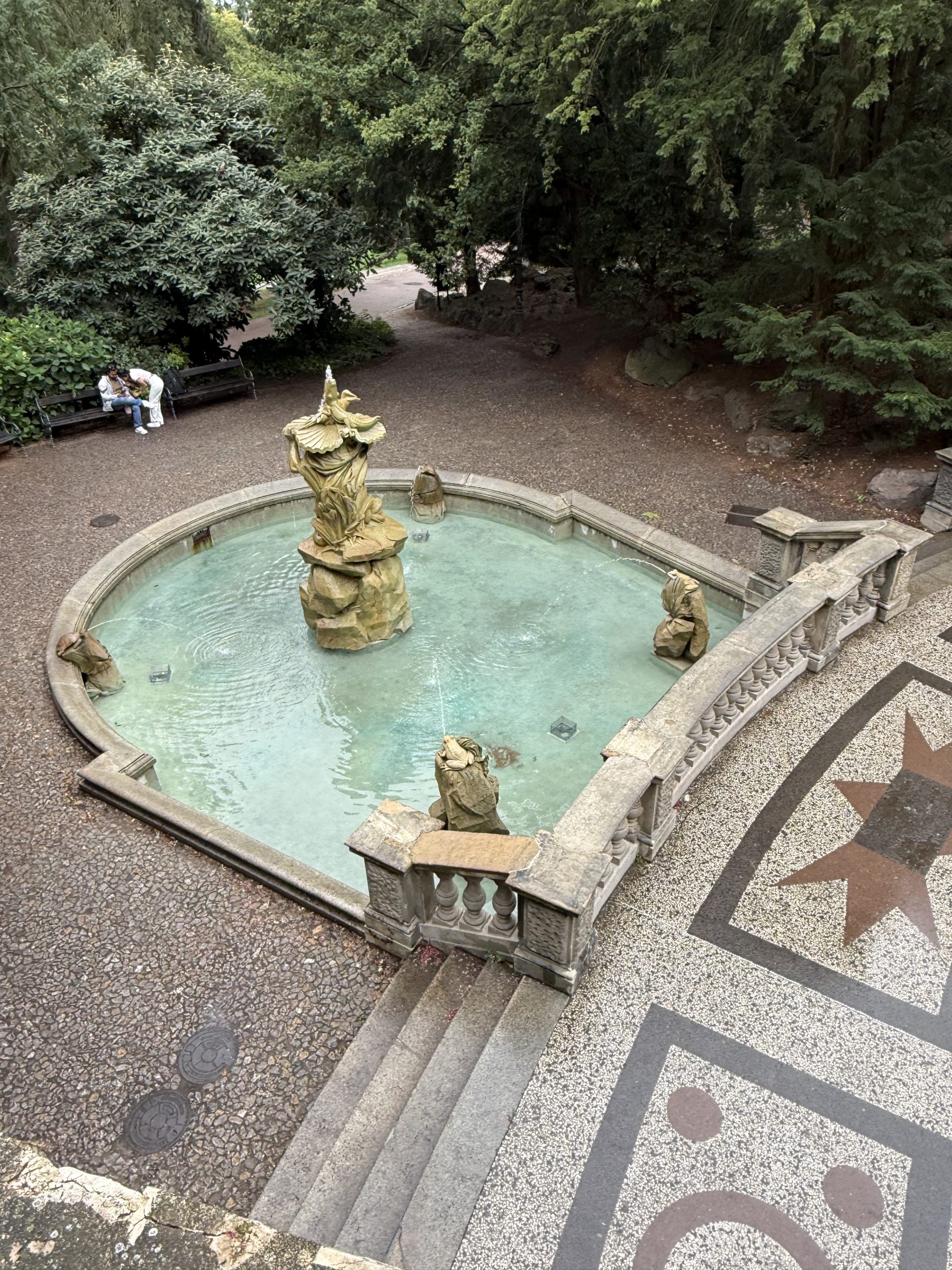
You feel a bit like Indiana Jones as you stroll through the large rocks, which are up to three meters high. First, you climb a few steps, then you spot a small cave with a place to sit on the left . In awe, you keep walking and almost trip because you’re so absorbed in your surroundings. In some places, the rocks are overgrown with plants, and the passageways branch off. Finally, you find yourself standing on a semicircular balcony, looking down at a fairy-tale-like fountain.
All of this was commissioned as early as 1871 by the park’s owner, the industrialist Moritz Gröbe. The artificial rocks were constructed from brick and mortar and then plastered. Scattered throughout the grounds are small hideaways—ranging from tiny caves for two people to large alcoves that can easily accommodate six. The highlight of the park, however, is the fountain with a sea god in the center.
Unfortunately , the grottoes have repeatedly been targeted by vandals or used for drug-fueled parties. There was even one instance of a “kidnapping”: The statue of Triton, the god of the sea, was stolen from the park and was not recovered until after a police search. The figure, which turned up at Třebotov Fortress, was subsequently replicated twice. One copy remained at the fortress, the second now stands in the grottoes, and the original can be found in the city’s New Town Hall.
Following extensive restoration work, the complex has been open to the public again since 2011. Forty million Czech crowns (approximately 1.6 million euros) were invested to restore it to its former glory. After visiting there, I can only say: Mission accomplished!
You can’t miss David Černý’s artworks in Prague. I’m not talking about those supposedly boring, meaningless statues. There’s definitely something going on here. But first, a few key facts about the artist. He was born in Prague in 1967 and first really attracted attention with a performance art piece in 1990. The conceptual artist grabbed a bucket of paint and painted a Soviet monument pink.
With this protest against the influence of the Soviet Union, he certainly didn’t make only friends. The activist has remained true to his principles to this day and is particularly critical of authority and social norms. He is supported in his mission by the City of Prague, which promotes his art in public spaces, as well as by private donors. After all, with his rather elaborate projects, he really needs all the help he can get.
Giant faces, naked men, and airplane butterflies
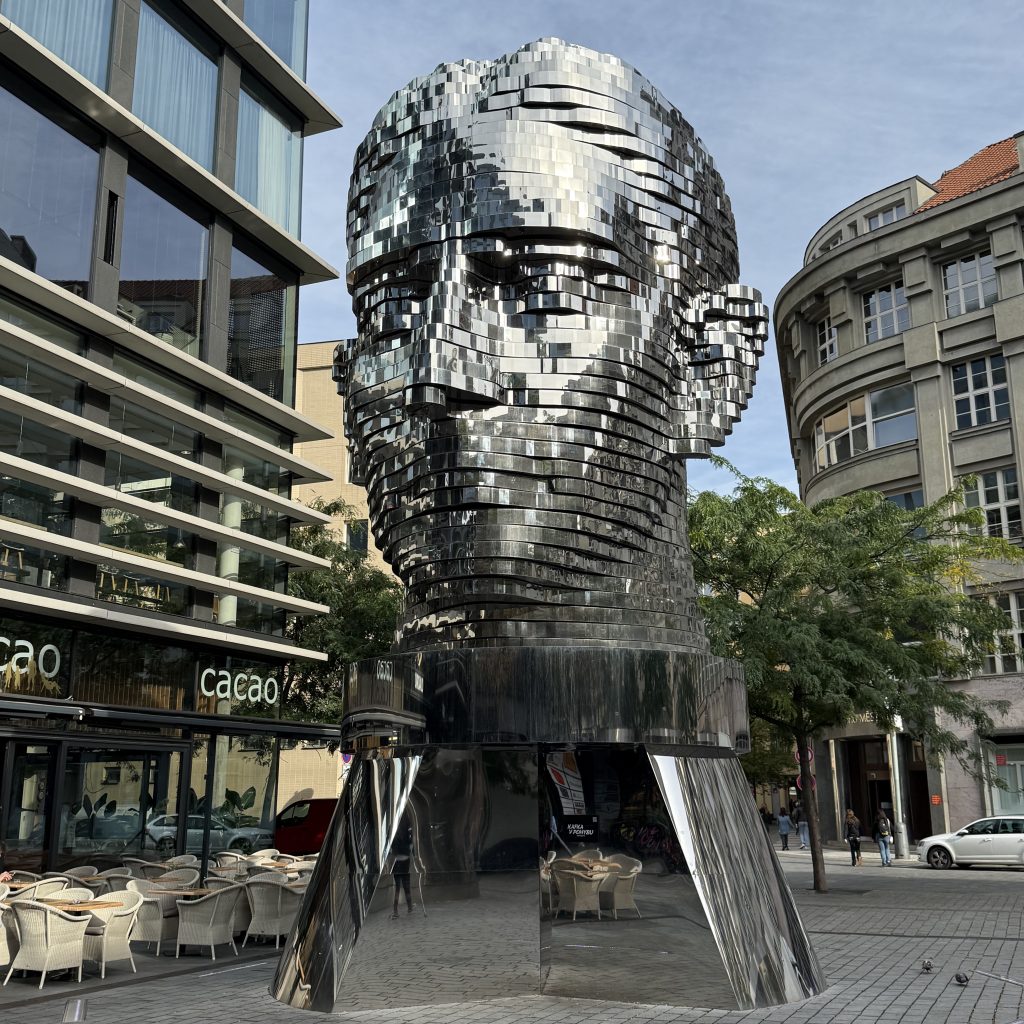
The best-known work is the Kafka Head. “METALmorphosis” is about 11 meters tall and consists of 42 moving discs. What makes it special is that the discs move every hour on the hour. First, the head rotates from one side to the other. Then the discs rotate in opposite directions or at different speeds. In total, the rotational movements of the artwork—which weighs just under 40 metric tons —last about ten minutes. The sculpture, which opened in 2014, stands in the backyard of the Quadrio shopping center.
The artwork moves every hour—surprisingly, completely silently.
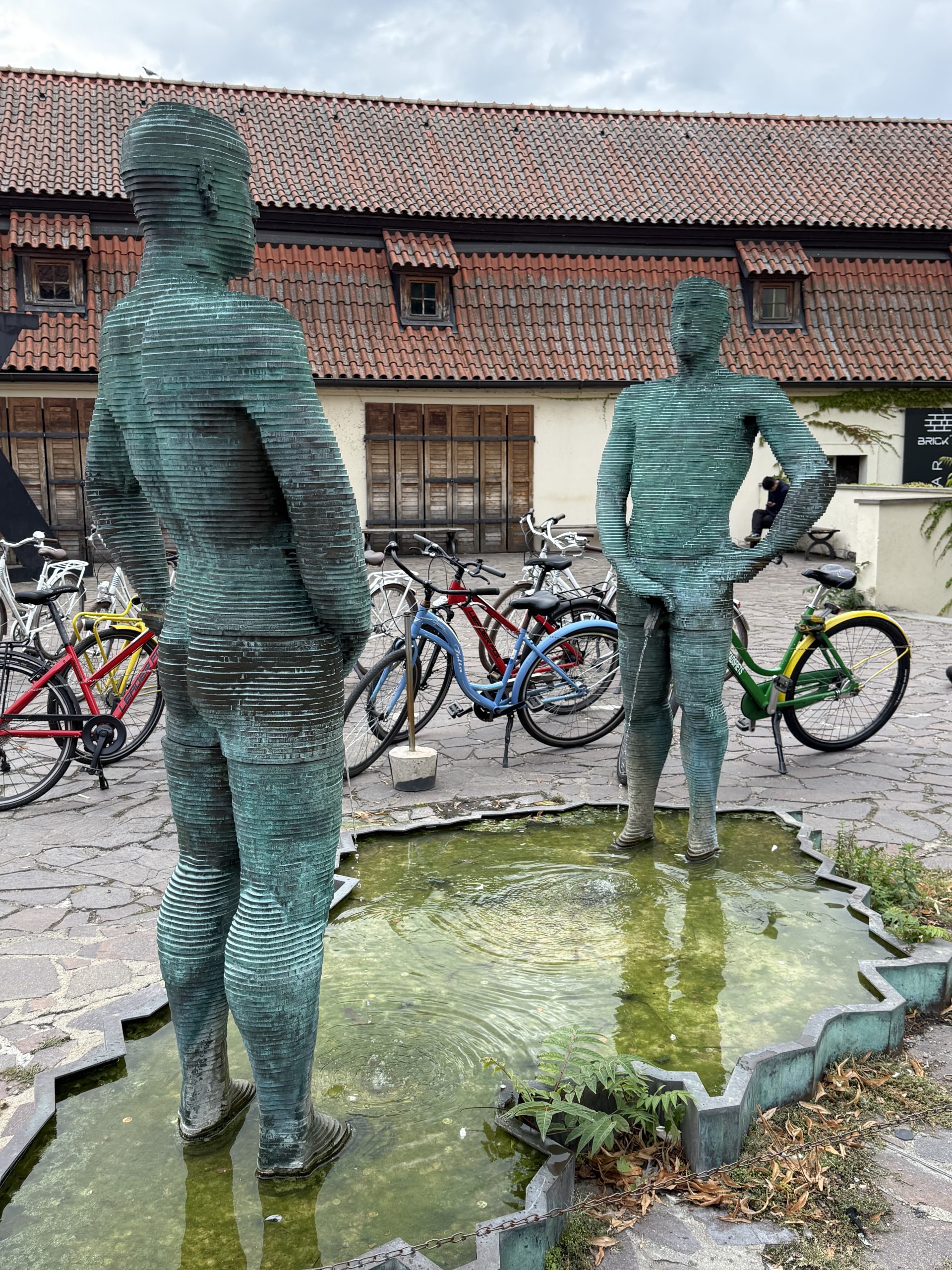
You’ll realize that the contemporary artist definitely has a sense of humor when you step into the courtyard of the Kafka Museum. The artwork there is aptly named“Piss Fountain.” The name says it all—two naked male figures are relieving themselves into a pond. And they aren’t rigid statues; they’re quite movable. Well, parts of them, anyway. The penises can be controlled and can even “write” entire words into the fountain. You can simply send the desired message via text message to the art installation.
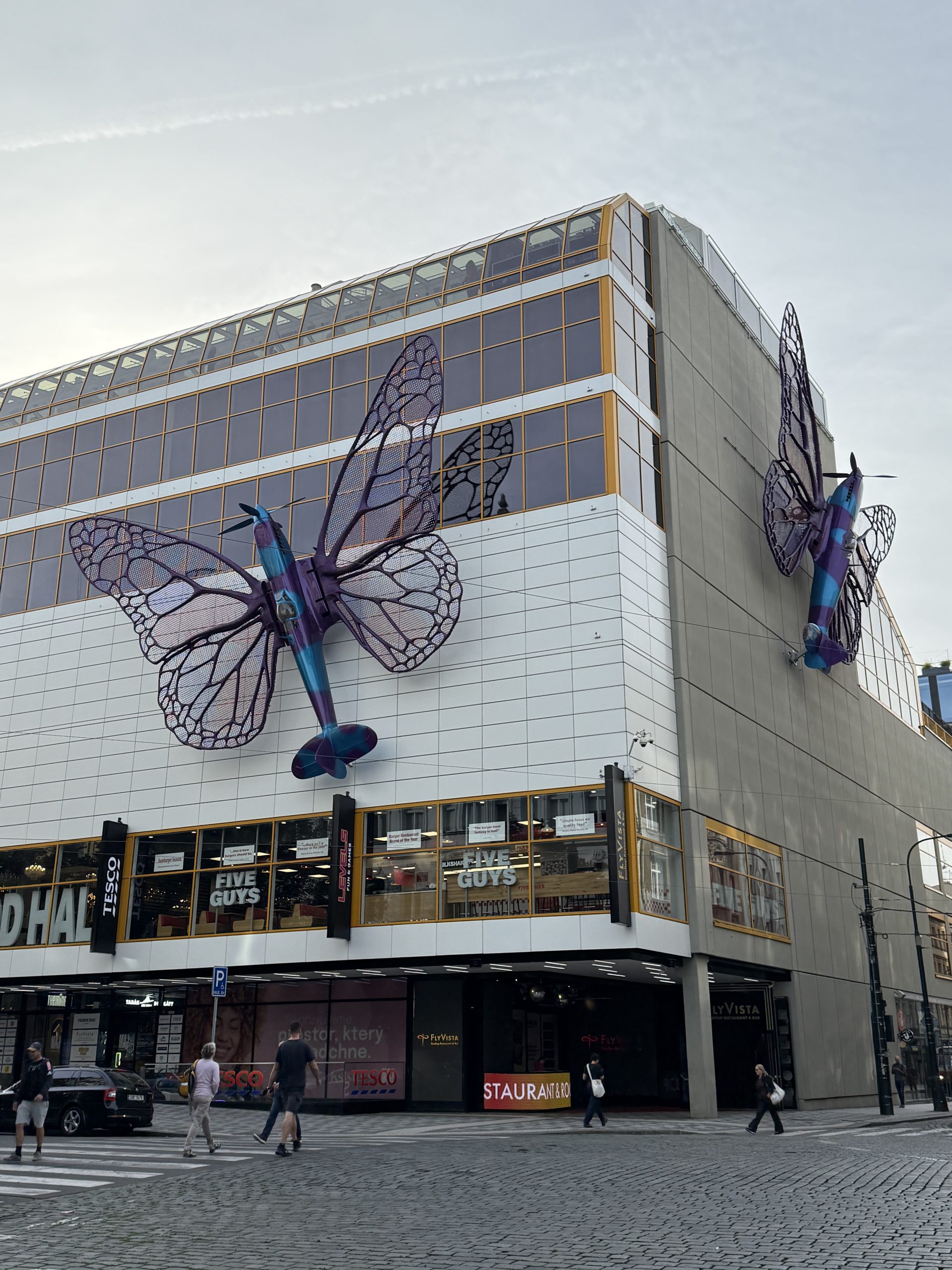
The“Spitfire Butterflies,”which can be found on the wall of the Máj department store, have a much more serious background. Parts of the artwork were created from old World War II fighter planes. The message here is obvious. The artist wants to show how even something as innocent and fragile as a butterfly (=peace) can quickly become a weapon. It is also a tribute to the Czech fighter pilots who served in the British Army during World War II.
The artist pokes fun at social norms.
Here, the artist has blended innocence with the horrors of war.
Amid Candles and Skulls
After climbing what seems like an endless number of steps and hills, it’s time to refuel. Of course, there are McDonald’s, food stalls, and fast-food restaurants on almost every corner. But I have other plans. I’m drawn to Prague’s oldest inn, which has been open every day since 1375.
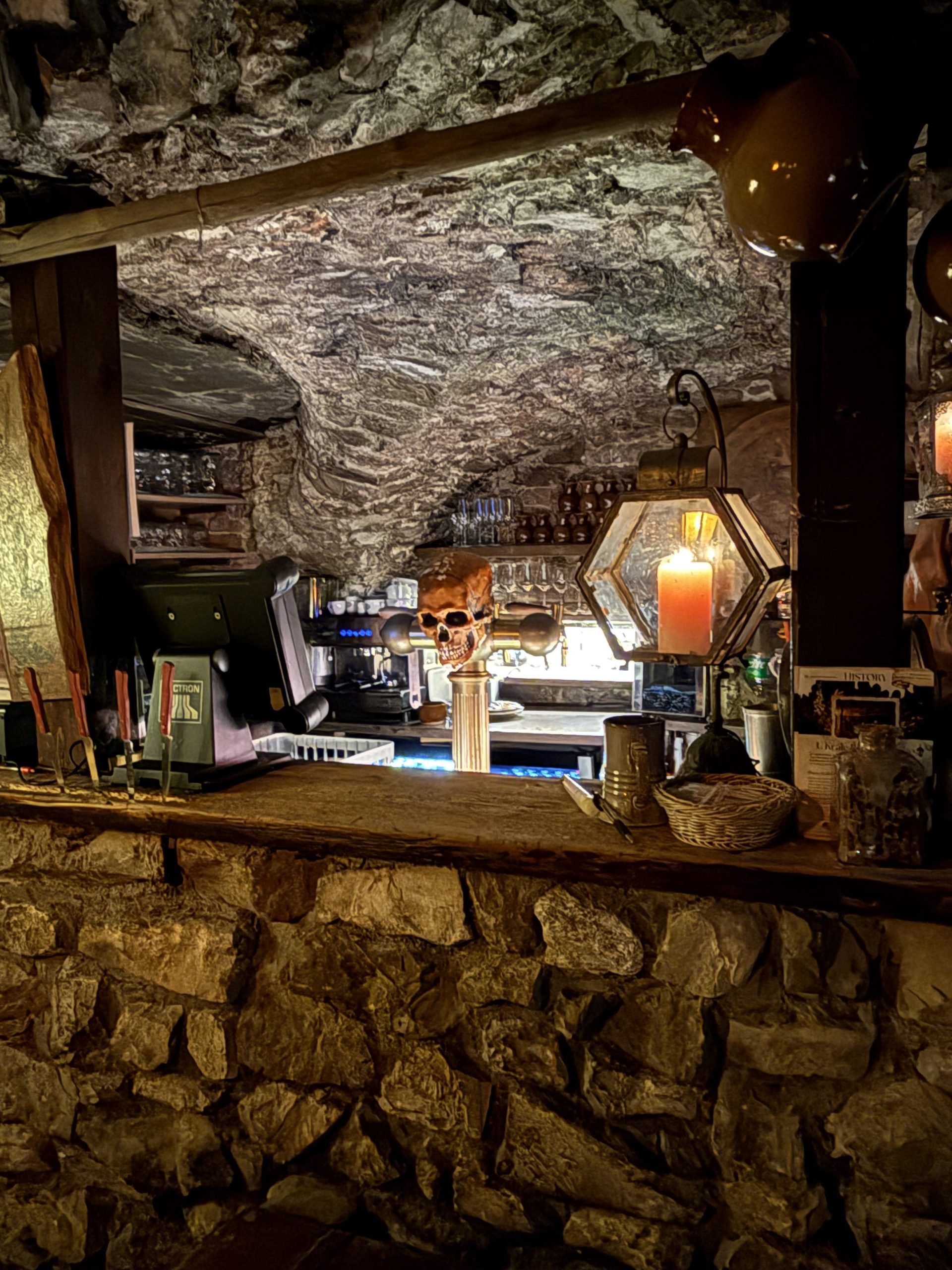
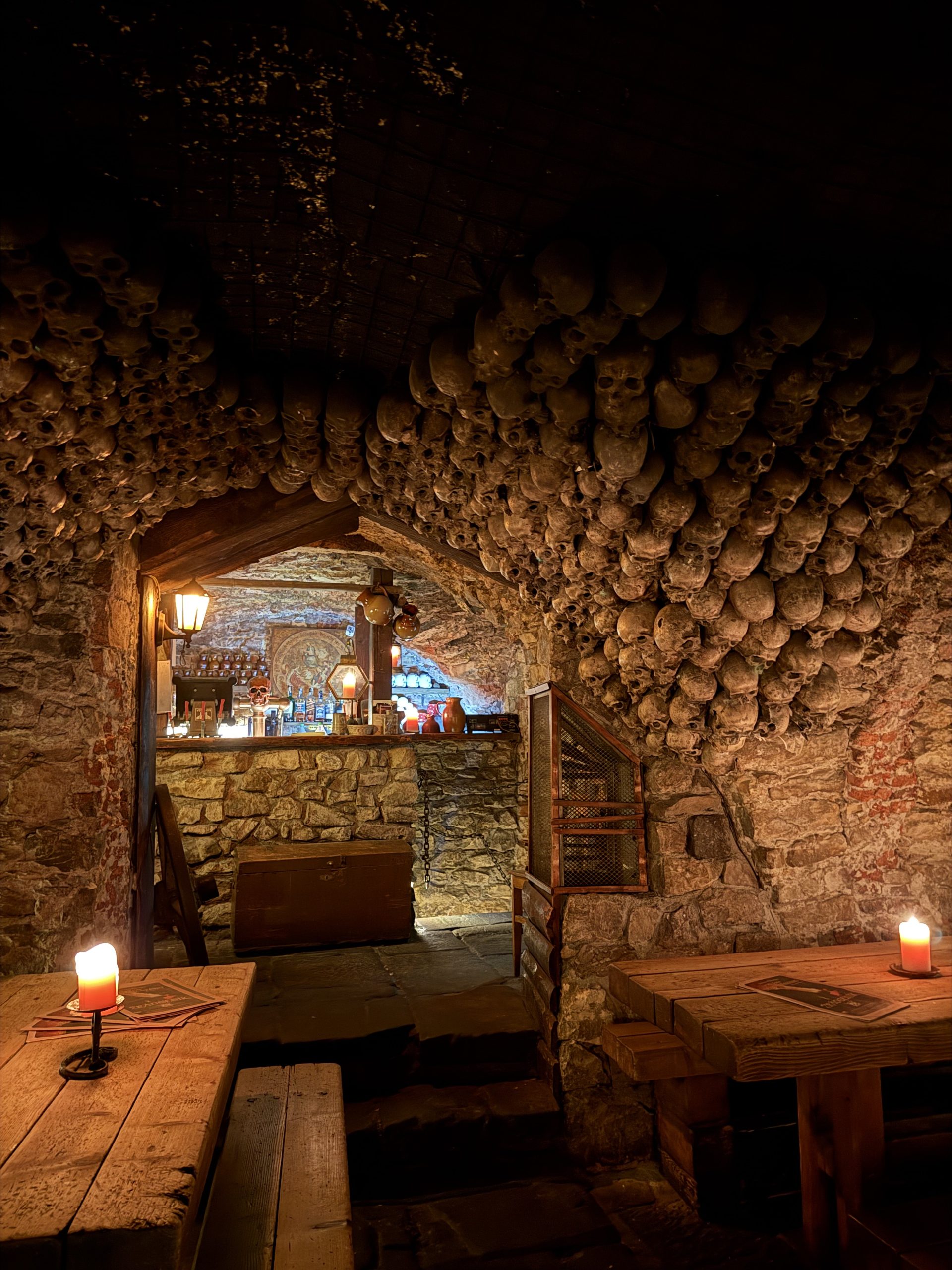
The location is ideal for the “Krčma U Krále Brabantského”—after all, the crowds of tourists have to pass right by it on their way to attractions like St. Nicholas Church or the Kaiserstein Palace. The “King of Brabant’s Tavern” has hosted King Wenceslav IV, several well-known alchemists, the executioner “Mydlar,” and even Wolfgang Amadeus Mozart.
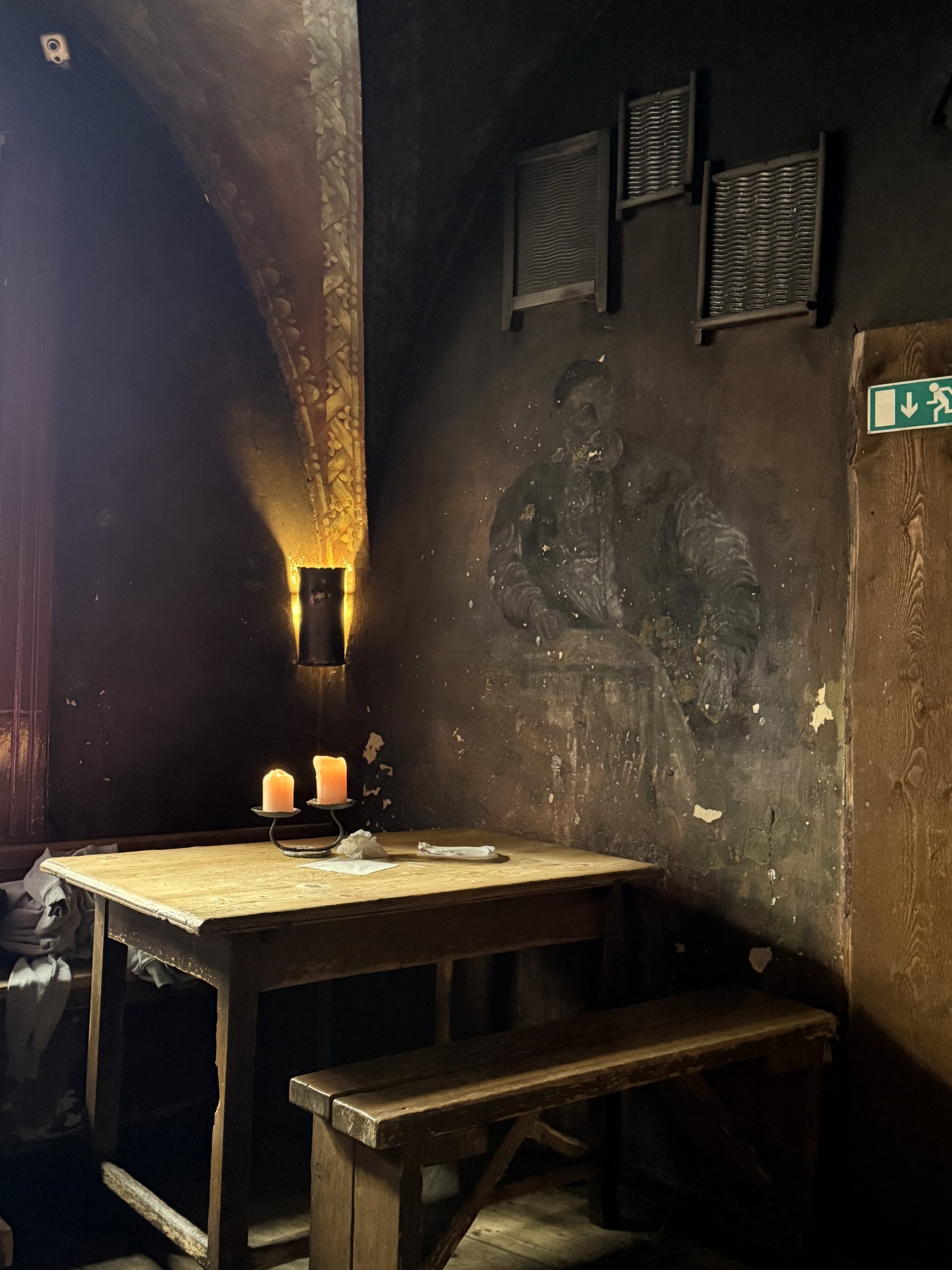
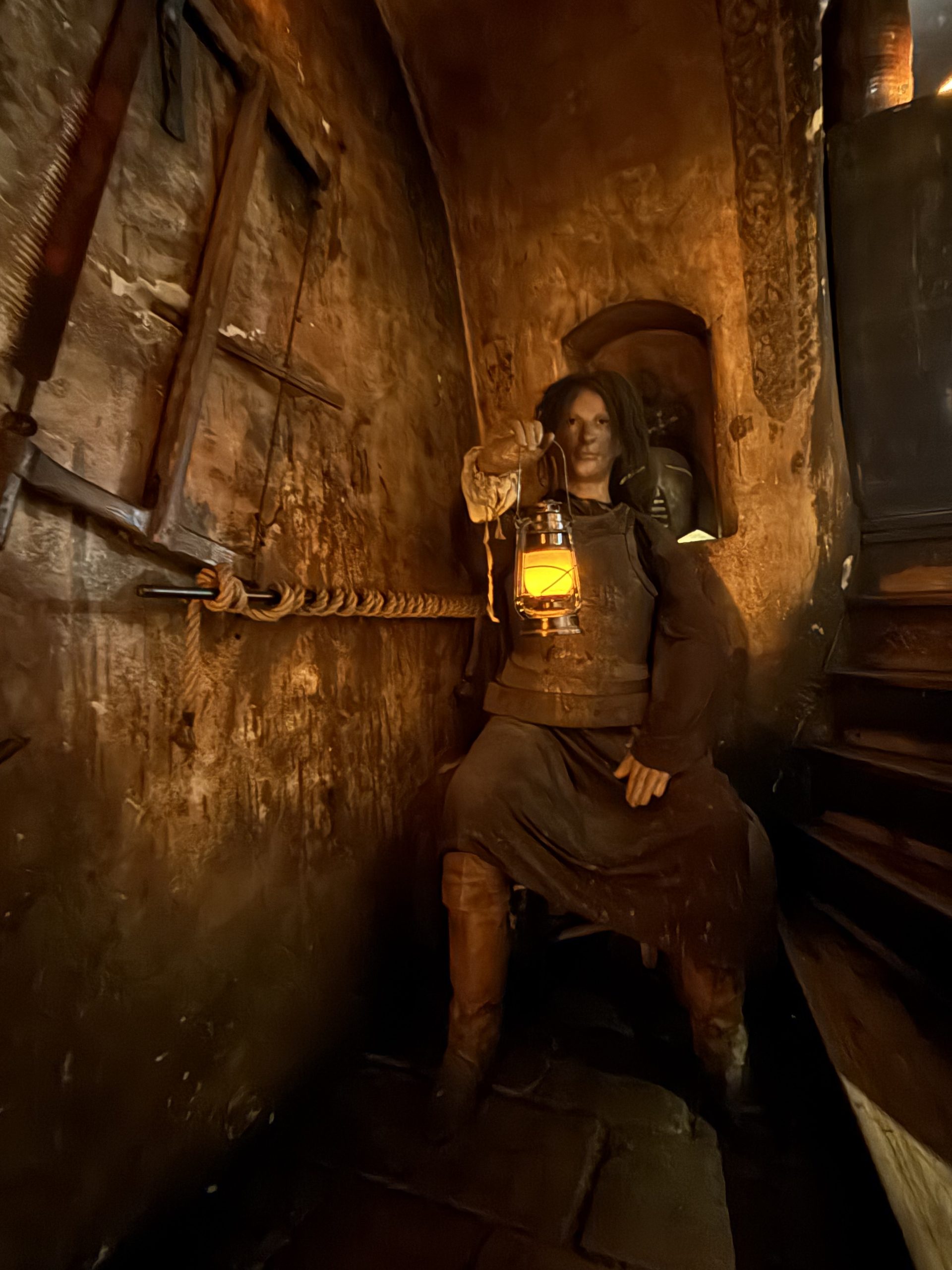
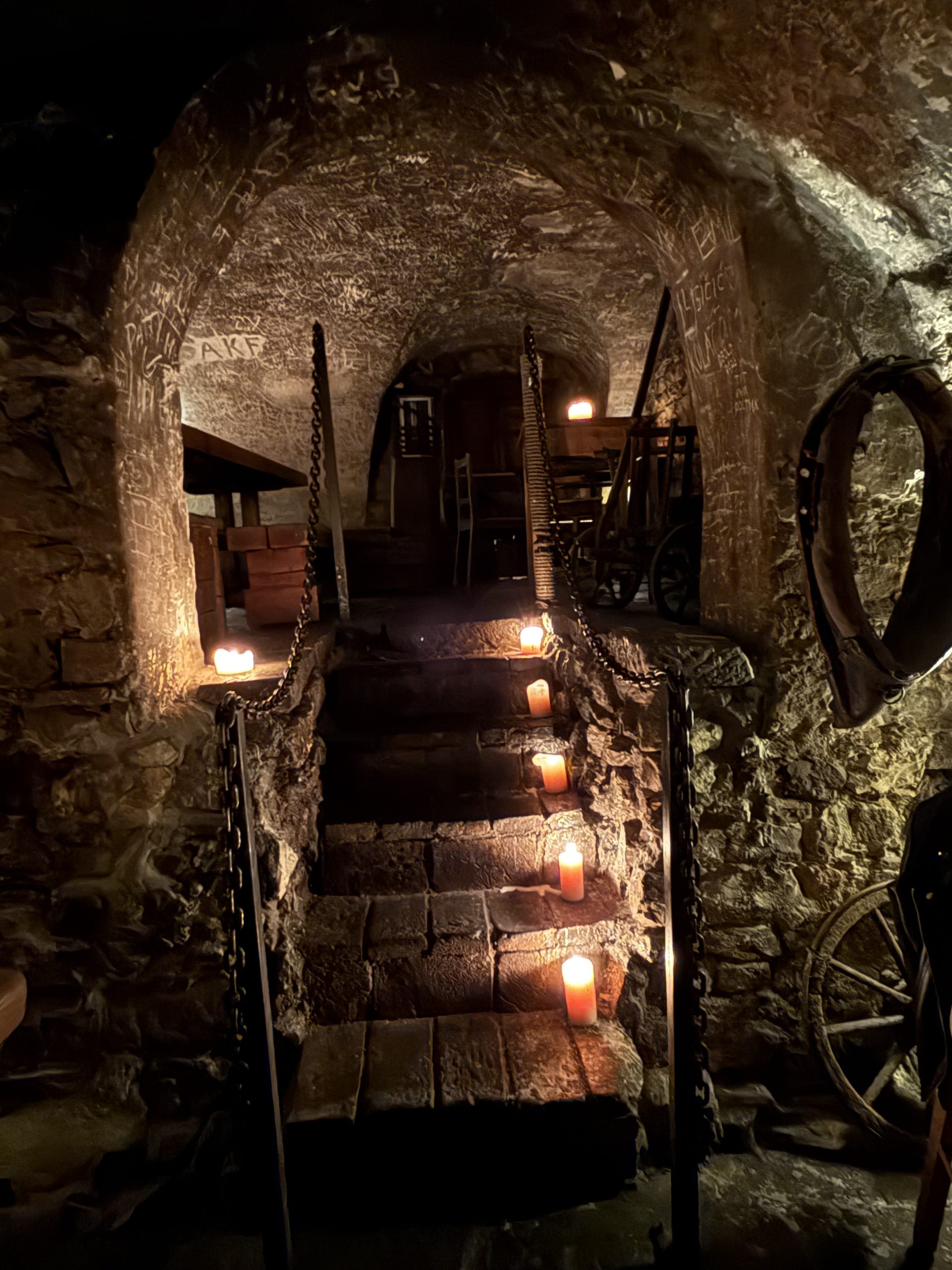
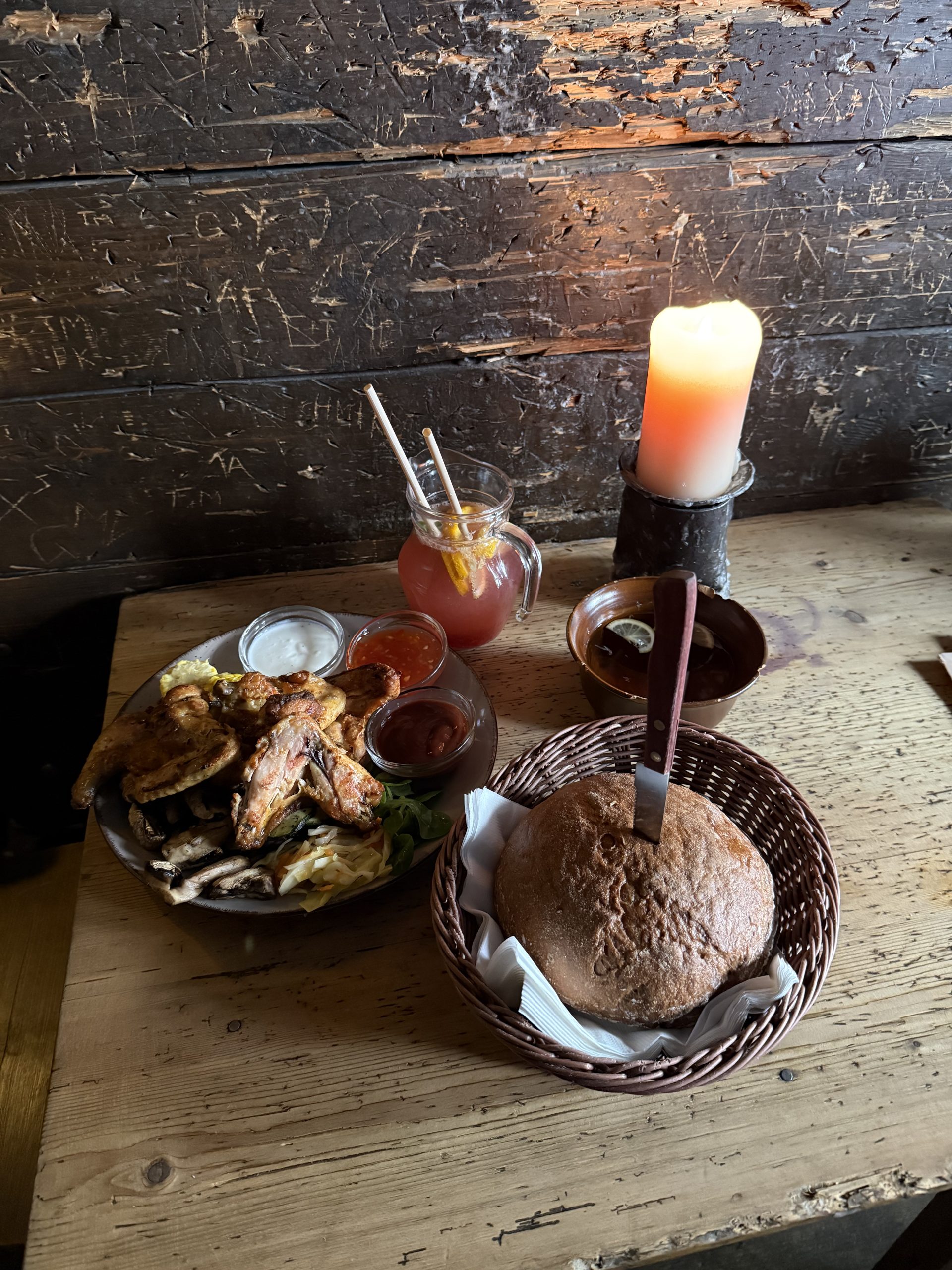
Inside the inn, you can choose from dishes like “pork knuckle in beer sauce,” “devil’s chicken,” or “shredded duck cooked in honey.” All of this is served in a medieval atmosphere. No electric lights—just lots of candles. By the way, I was there at noon and could barely see my hand in front of my face—that’s how dark it is inside the restaurant.
Here, you have to let yourself be swept up in the medieval charm. Drinks are slams down on the old tables with a flourish, and there’s loud laughter and banter. Tools from days gone by hang on the walls, and the beer comes from a tap with a skull and crossbones. By the way, there’s no cutlery either—at least I had to eat my ribs and coleslaw with my bare hands. But they did serve a whole loaf of bread on the side.
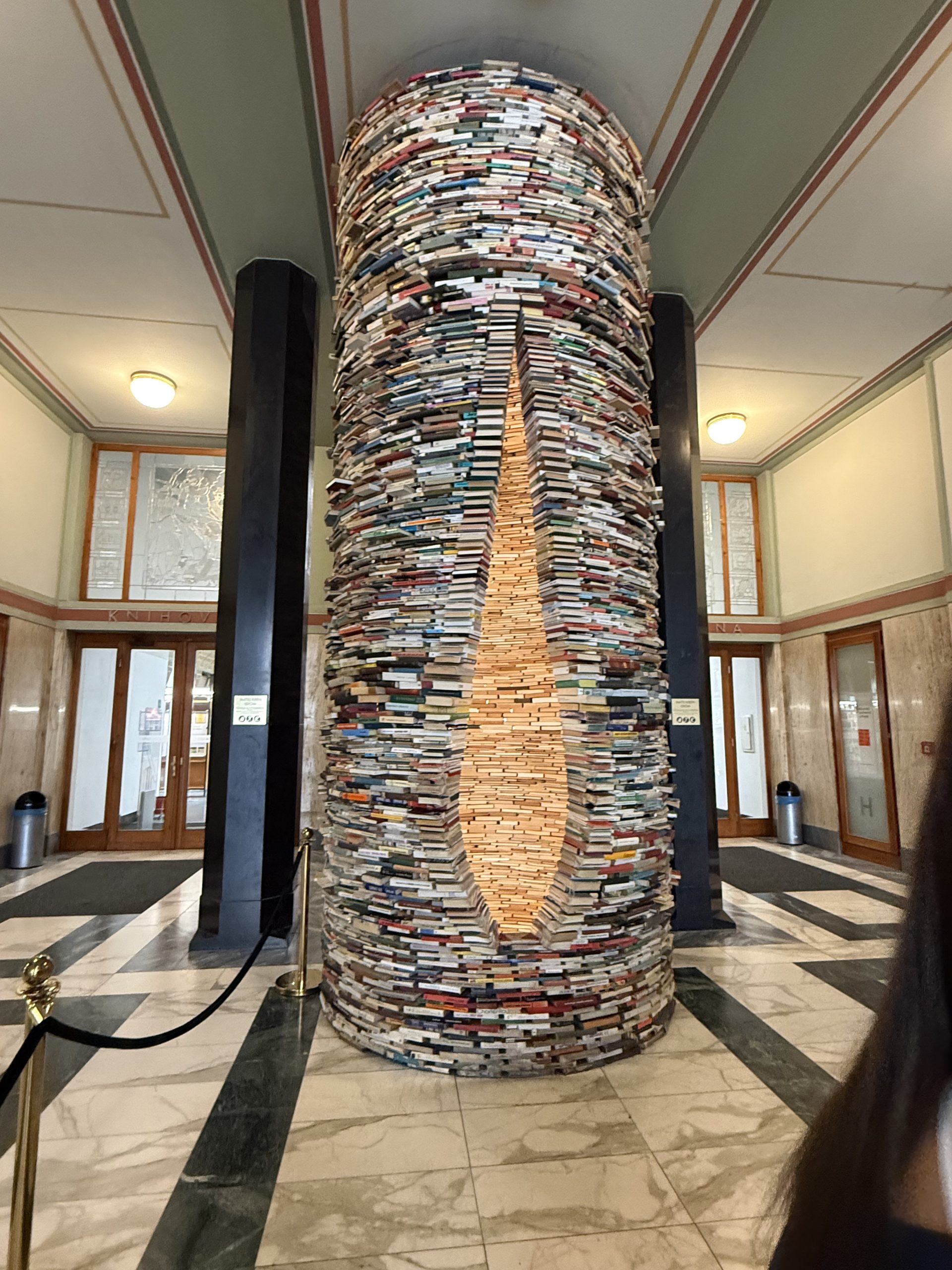
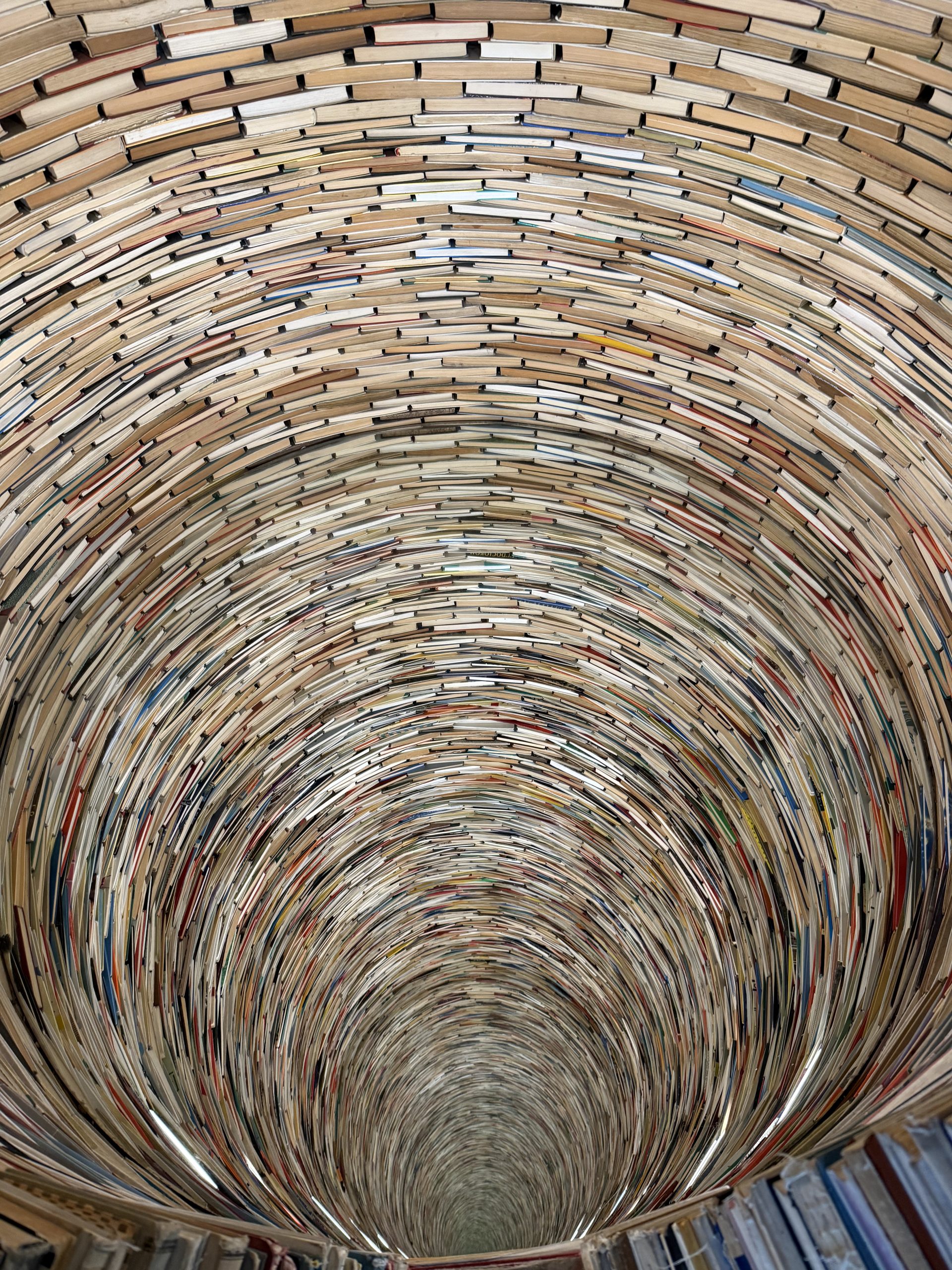
Since I was already downtown, I figured I might as well stop by the library, I thought to myself. Right in the entrance area, you’ll find what appears to be an “endless tower of books.” From the outside, the 8,000 stacked books don’t look all that spectacular. But once you take a look inside, you’ll understand the hype surrounding the “Pillar of Knowledge.”
Slovak artist Matej Krén completed the artwork back in 1998. It’s an optical illusion created using mirrors. Visitors are willing to wait an hour or more to see it. I have to admit, I wouldn’t have waited that long. In my case, it was just ten minutes. You’ve got to be lucky sometimes.
Viewed from a distance, the artwork appears rather unspectacular.
The "Pillar of Knowledge" seems infinite. It's an optical illusion.
However, discovering all these treasures—and many more—in Prague has little to do with luck. It requires careful planning and a lot of organization. Through more than fifty trips to a wide variety of regions around the world, I’ve gained a wealth of experience. What do you need to keep in mind, how can you best combine different sights, and where can you save money without running into problems once you’re there?
I can help with that. Whether it’s a city trip, a cultural vacation, or just a totally relaxing beach vacation with a few excursions as highlights. Let’s plan your next vacation together—via a Zoom video call or, depending on your location, at a café near you. Just contact me using the form.
There's also plenty to discover in my online store.



Add a Comment