The classic novel *Dr. Jekyll and Mr. Hyde* was written by Robert Louis Stevenson in 1886. The book is about a man who is a respectable citizen by day but becomes a completely different person at night. However, the author did not make up this story. Something very similar actually happened in 18th-century Edinburgh.
The author was born in November 1850 in the Scottish capital and lived there for the first 29 years of his life. During that time, he likely heard about William Deacon Brodie, whose eventful life came to an end on the gallows on October 1, 1788. Brodie served as the inspiration for the novel that can be found in millions of children’s bedrooms today.
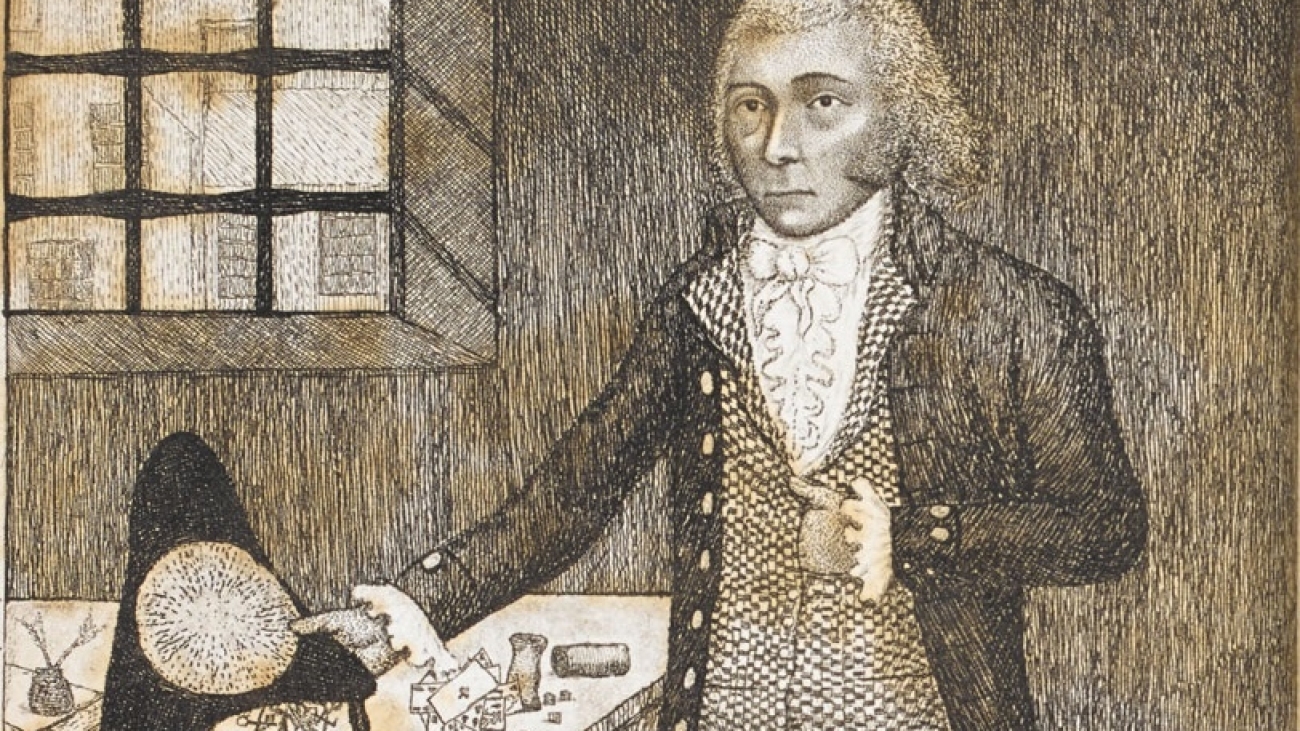
Brodie was born in Edinburgh in 1741, the son of a carpenter. He followed in his father’s footsteps and, through talent and hard work, quickly became one of the most respected furniture makers. Brodie was also a respected member of the city council and even served as chairman (deacon) of the Stonemasons’ and Bricklayers’ Guild. He loved life and lived it to the fullest—which led to five illegitimate children, two mistresses, and an unbridled addiction to drinking and gambling.
That's how Brodie wanted to get rid of his debts.
In addition to repairs and restoration work on wooden furniture, his work also included installing security locks on doors. One day in 1768, he realized the potential of this line of work. He had finally found a way to pay off his mounting gambling debts. Whenever a wealthy customer came to him to have a burglar-proof lock installed, he was happy to oblige. However , he would make a second set of keys for himself before handing over the finished product to the customer.
His first heist targeted a bank. At gunpoint, he made off with about 800 British pounds—a large sum of money for that time. Since this first attempt went so well, he expanded his operations. He recruited his accomplices Brown, Smith, and Ainslie.
Together, the quartet ran amok in Edinburgh and didn’t even stop at stealing silver from the University of Edinburgh. This crime spree lasted for several years. By day, Brodie was an upstanding craftsman and a trusted public figure; by night, he was a member of a burglary gang. This double life went well for a long time —until he was finally caught.
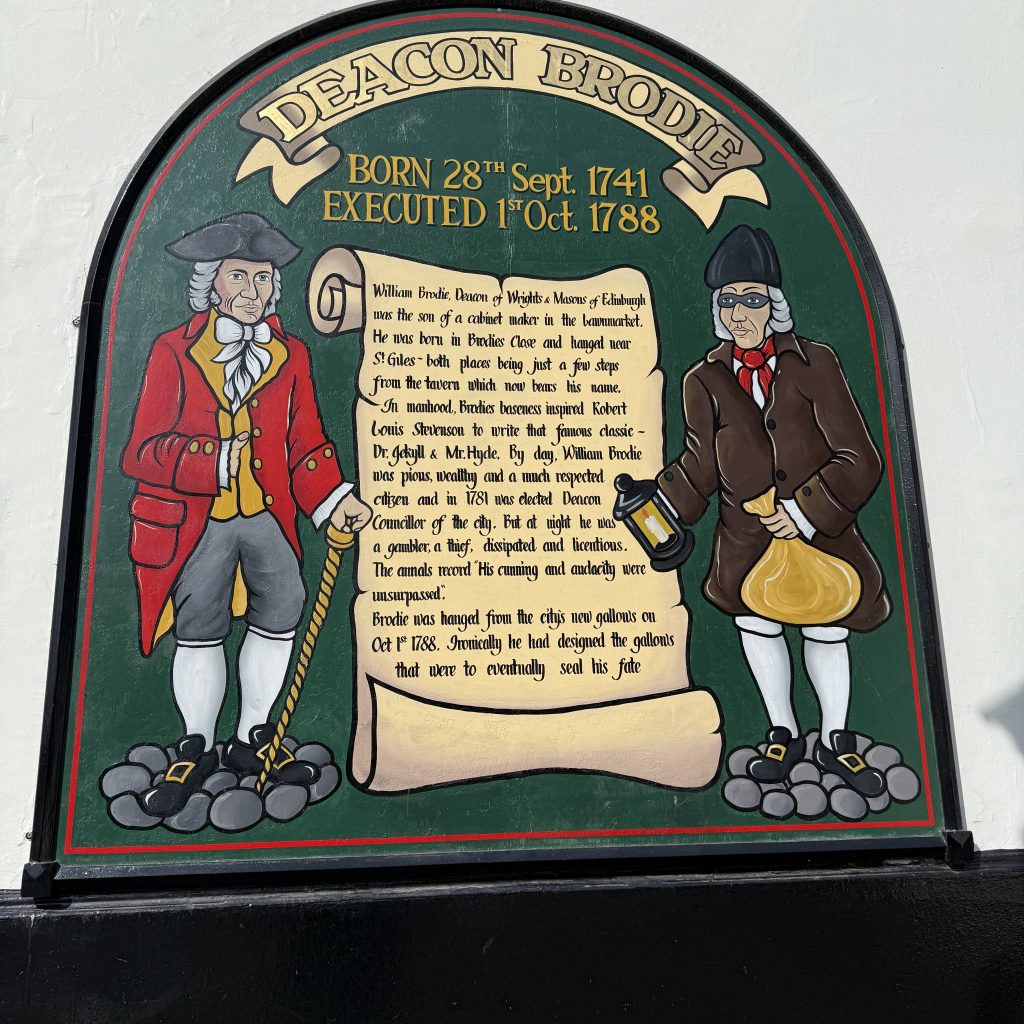
The Deacon Brodie Tavern features a plaque commemorating the story of its namesake.
A nap was the beginning of the end.
His downfall came during a break-in at one of His Majesty’s tax offices at Kessels Court in the Canongate district. The break-in ended in disaster after Brodie dozed off while standing guard. His accomplices were apprehended by the police and wasted no time in testifying against him as key witnesses. Brodie had managed to flee to the Netherlands. However, he was not at large for long. He was captured in Amsterdam and extradited to Scotland .
On August 27, 1788, the trial began with only a small amount of evidence against him. When officials finally searched his house, they found his burglary tools. In addition to duplicate keys and masks, pistols were also seized from him. The jury returned a unanimous guilty verdict and sentenced the two to death by hanging.
Brodie and his accomplice Smith were scheduled to be executed together on October 1, 1788, at the customs house near St. Giles Cathedral. But the “honorable” crook still had an ace up his sleeve. He bribed the executioner to ignore the protective steel collar around his neck. He also instructed him to remove his body from the noose as quickly as possible after the execution.
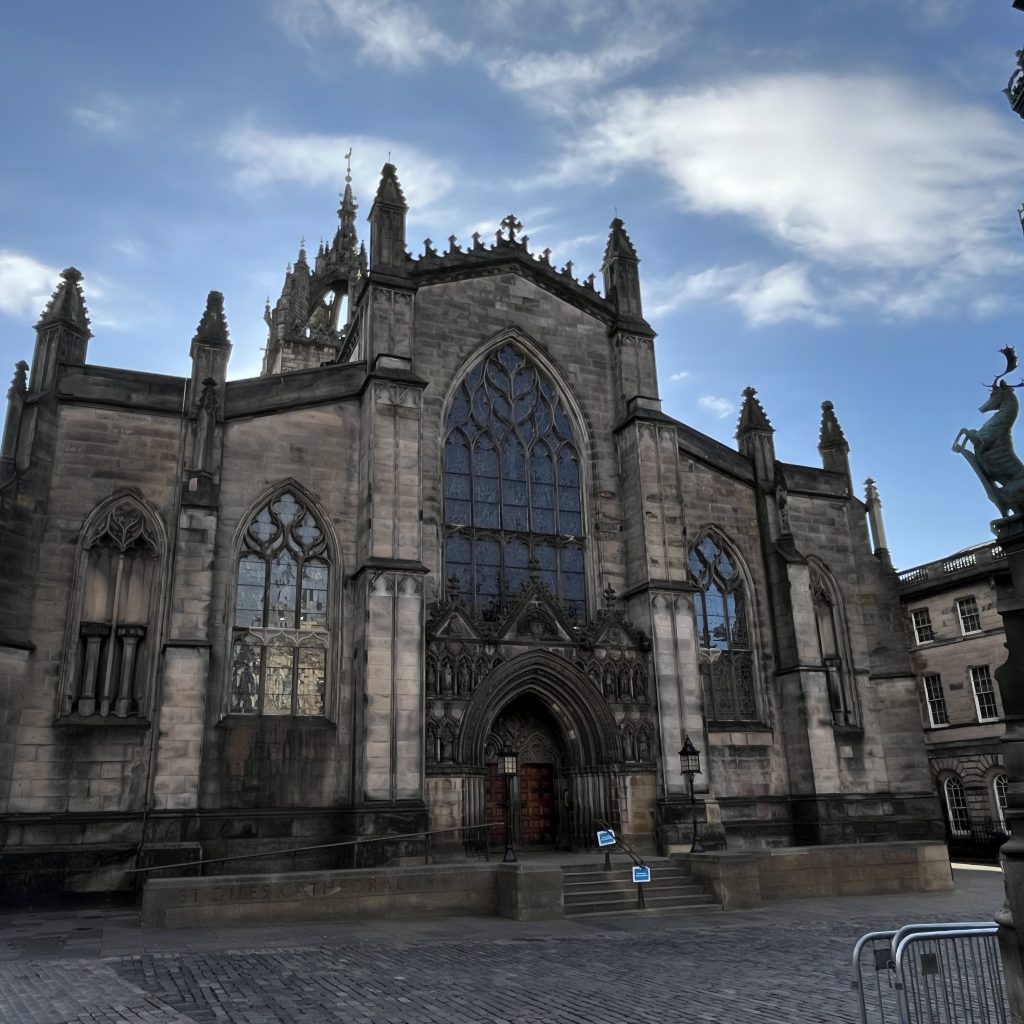
St. Giles' Cathedral—Brodie's execution took place very close by.
Did he make it?
In the end, none of that seemed to do him any good at all. He most likely died on the gallows and was buried in an unmarked grave. Nevertheless, someone claimed to have seen Brodie in Paris a few months later. We’ll probably never know for sure whether the crook with the double life managed to get away with it after all.
Ironically, the execution took place using the very model that he himself had recently approved in his capacity as a city councilman. At the time, he had proudly announced to the citizens that this new gallows was the most efficient and reliable of its kind. In the end, he himself provided the proof of that.
*Dr. Jekyll and Mr. Hyde* wasn’t the only work influenced by his life in Edinburgh. In 1884, in his novel *The Body Snatcher*, he had referred to the grave robbers who searched the city’s cemeteries for corpses to sell to the medical university. Some of them, however, didn’t want to wait for someone to die of natural causes and gave things a little nudge. Like the legendary duo Hare and Burke. HERE is their story.
You can find more stories like this about Edinburgh, including photos and videos, in my online presentation.




Add a Comment