Some time ago, there was talk of reopening Alcatraz Island. The plan was to send “America’s most dangerous and violent criminals” there. This had been done before. Let’s take a look back.
Alcatraz, San Francisco, 1953. The cell door slams shut with a loud bang. As the completely naked prisoner tries to find his bearings in the pitch-black cell, he stumbles with one foot into a hole in the floor. A wave of disgust washes over him as he realizes what he has just stepped into. The man had just found his toilet.
A fictional story, but one that could very well have happened. Serving time at Alcatraz was a nightmare in itself. But if you didn’t follow the rules to the letter, it turned into a living hell.
Hard times
Between 1920 and 1940, the United States experienced an unprecedented wave of crime. Prohibition and an extreme economic crisis (also known as the “Great Depression”) led, among other things, to rising lawlessness. Gangster bosses like Al “Scarface” Capone and George “Machine Gun Kelly” Barnes were practically revered by the public for their deeds. The leaders of organized crime had to be locked up immediately before the situation got out of hand. The authorities were in agreement on this.
The island, located just under two kilometers from San Francisco, seemed like a good solution. Alcatraz had been used as a military prison since 1853. In 1934, it was converted into a maximum-security prison. Among other measures, tear gas canisters were built into the ceiling of the dining area, watchtowers were erected at strategically important locations, and several metal detectors were installed at the exit of the dining hall. Of the total 600 cells, not a single one was adjacent to an exterior wall. So, in an escape attempt, the inmates not only had to free themselves from their cells but also had to escape from the entire building.
The 8.5-hectare island quickly gained a reputation as the prison with the strictest discipline and harshest punishments. And escape was virtually impossible for the all-male inmate population due to the security measures in place. The strong ocean currents in San Francisco Bay then completely dashed any dreams of freedom. “The Rock,” as the island was also known, was feared among the prisoners.
The director of the institution already had experience
James Aloysius Johnston served as warden of Alcatraz from August 1934 to 1948. At San Quentin, his previous prison, he had successfully introduced educational programs and a reward system for inmates with good behavior.
When he was put in charge of Alcatraz, he immediately established a few rules. For instance, no prisoner was to be sent directly from the court into his custody. However, other prisons were able to send their “unmanageable” inmates to the island. Thus, troublemakers and prisoners who had attempted to escape ended up in the notorious prison. But even well-known inmates like Al Capone, who enjoyed special privileges due to their status, were transferred to“The Rock.”
Things work a little differently on Alcatraz
When the first 200 prisoners arrived in August 1934, they quickly realized that things were a bit different here. There was no special treatment. Inmates even had to earn the right to receive visitors. During the first three months, this was generally not permitted. Even after that, a maximum of one visiting day per month was allowed. Letters, whether sent from or to the prison, were read, censored, and retyped on a typewriter. Work was a privilege that had to be earned. The cells contained only the bare essentials necessary for survival.
The inmates were forbidden from having any contact with the outside world. They were not allowed to move about freely; they did not even know the entire building. The men were accompanied by guards everywhere they went. In most prisons of that era, one correctional officer was responsible for twelve inmates. At Alcatraz, there were three. Although this allowed the officers to keep a close eye on their “charges,” a head count was still conducted a full twelve times a day.
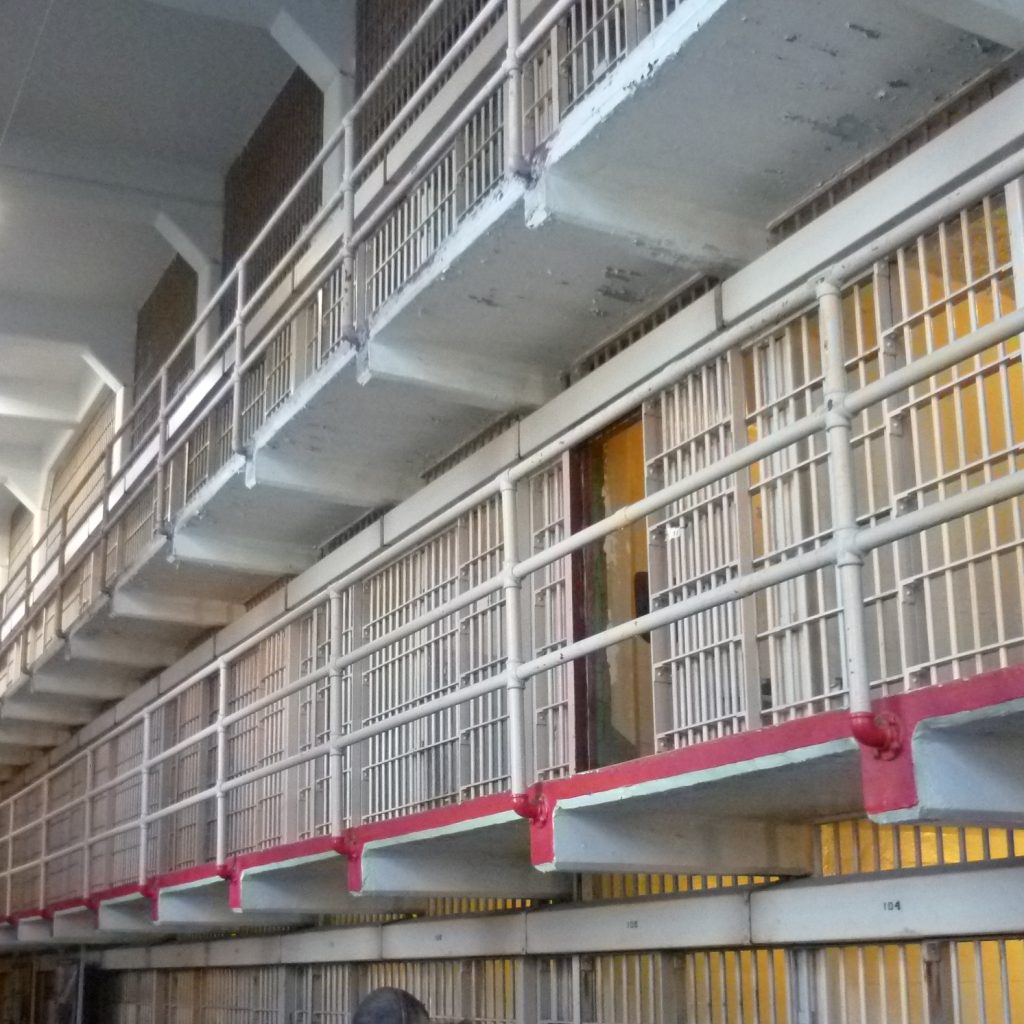
The cells were divided into blocks. Block D was the least popular (there were guards there particularly often)
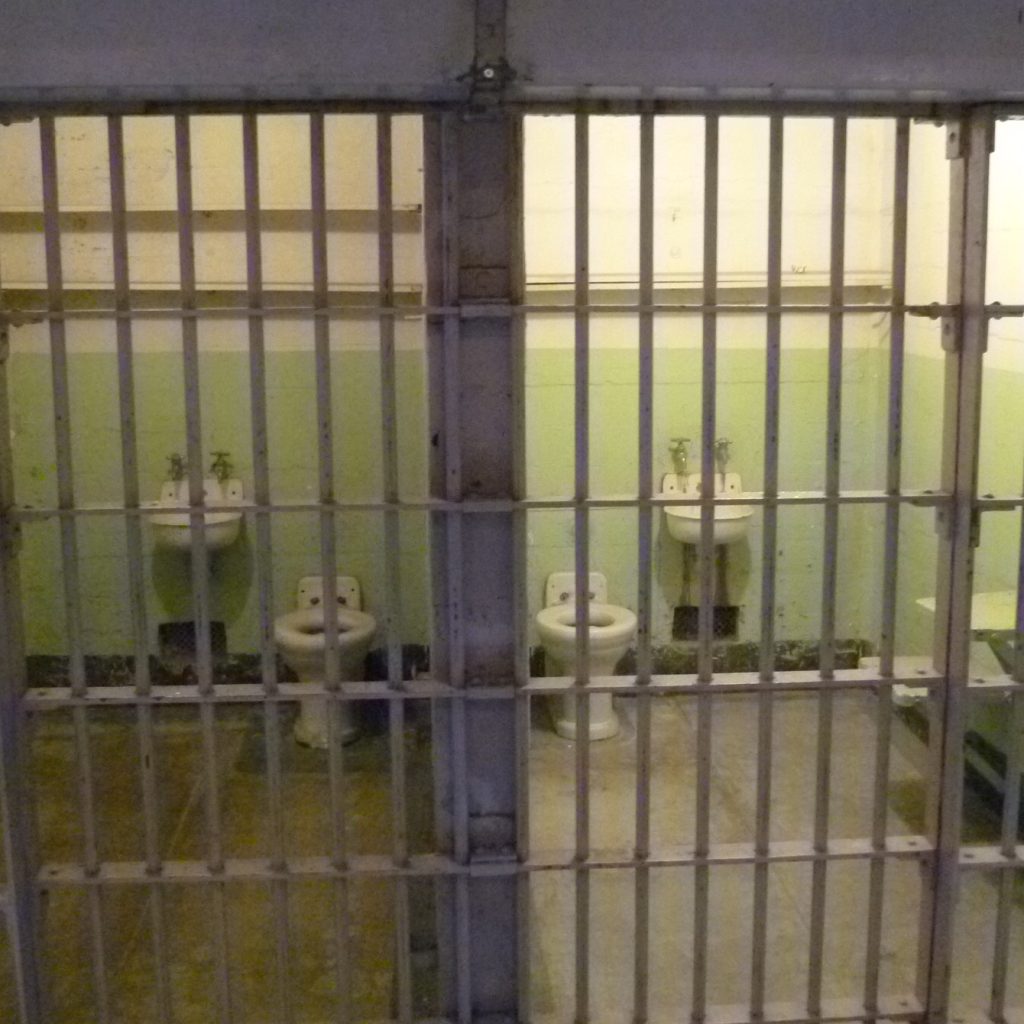
The cells were very sparsely furnished. Of course, there was also a bed.
The daily schedule was strictly regulated. After the inmates were woken up at 6:30 a.m., they had just under half an hour to get ready. During this time, they had to tidy up their cells and wait outside their quarters for the first headcount of the day. At 6:55 a.m., they went to the dining hall for breakfast, accompanied, of course, by prison guards. The meal had to be finished within 20 minutes, because then it was time to start work.
The "Code of Silence"
Warden Johnston believed that absolute silence throughout the cell block would discipline the inmates. Any unnecessary conversation was punished with ten days in solitary confinement. As it turned out, however, these drastic measures caused other problems. There were numerous cases in which the constant silence led to severe mental disorders, including self-mutilation. Convicted bank robber Rufe Persful resorted to an extreme measure. Driven by a desperate desire to be transferred to another prison, he cut off four fingers of his hand. Shortly thereafter, Johnston’s dreaded“Code of Silence”was finally relaxed.
Drastic measures in the event of a violation of the rules
For inmates who broke the rules, there were far worse punishments than silence. Few prisoners spoke about it. But the few who did describe the conditions behind the island’s walls recounted true horror stories. They told of the so-called“strip cell,” where inmates were deprived of all their peripheral senses.
In practical terms, this meant that the prisoner was first stripped of all his clothes. Completely naked, he was then placed in a pitch-black cell. There was neither a sink nor a toilet. Instead, there was a small hole in the floor; the flush for this medieval-looking toilet was operated by the guard.
The inmate received only limited food through a small slot in the cell door. At night, the prisoner was given a mattress, which was removed again at dawn. In addition, the guards carried out“disciplinary measures”using rubber hoses, brass knuckles, or belts. This harsh punishment was imposed for a maximum of one to two days.
"The Hole" was better
The“hole” was less severe. These cells had a sink, a toilet, and a dim light bulb. Here, too, the inmates’ mattresses were taken away during the day. The prisoners had to endure up to 19 days of grueling boredom and isolation. If they behaved well, the guards would occasionally open a small panel on the outer door to let a little light into the cell.
Inmates who had not committed any major rule violations were held in standard solitary confinement. They were allowed fresh air once a week and were permitted to shower twice a week. Meals were brought to their cells. The inmates had a view of the mainland, which many saw as a punishment. Freedom was so close, yet out of reach.
This sight awakened in many prisoners the desire to escape.
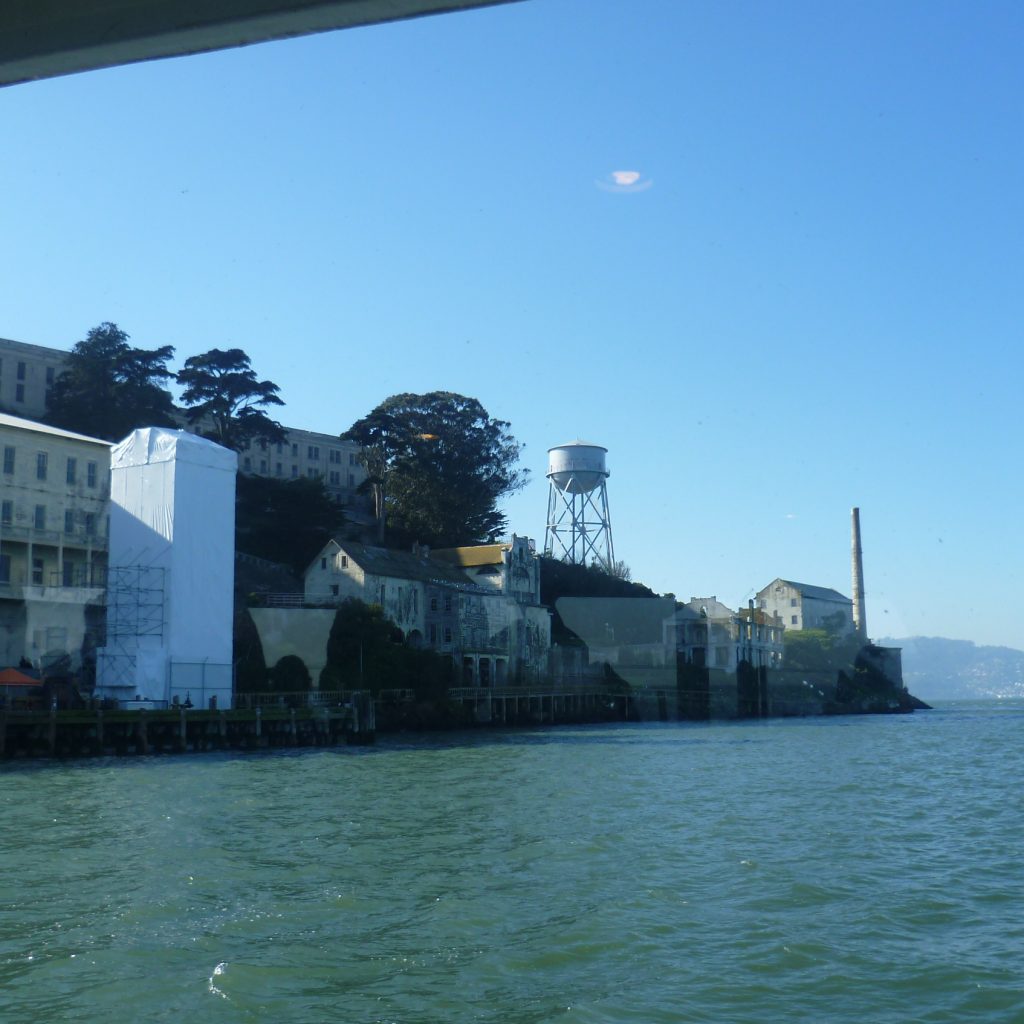
This is what the prisoners saw when they were transferred to Alcatraz.
Maybe we should take the plunge after all?
It was precisely this sight that led some prisoners to consider an escape. In the nearly 30 years that Alcatraz served as a prison, there were 14 known escape attempts. The first to attempt it in April 1936 was a certain Joseph Bowers. According to research by ORF on May 12, 2025, however, this was actually a man named Josef Ebner, an Austrian. Like the other 33 prisoners who had dared to attempt an escape, the man from Rohrbach had no chance. They were all either captured or lost their lives in the strong ocean currents. Officially, there has not been a single confirmed escape from the prison island.
The prison is closing
Due to the enormous maintenance costs and the dilapidated condition of the buildings, “The Rock” was finally shut down by the government in 1963. The salt water constantly lashing against the sandstone island had brought the prison island to an end. Renovation would have cost an estimated five million dollars. On March 21, 1963, the time had come: Alcatraz Prison was shut down.
The island remained deserted until 1969, when a group of Native Americans claimed it. The Native Americans’ grand plans to establish an educational and cultural center for their people ultimately failed due to the lack of natural resources on Alcatraz. Everything had to be brought in by boat, which was an expensive and very labor-intensive undertaking from a logistical standpoint. In June 1971, government officials finally cleared the island.
Alcatraz has been an official part of the Golden Gate National Recreation Area since 1972. A little over a year later, it was opened to the public. Every year, millions of people take the opportunity to take a ferry to the prison island and see the prison for themselves.
Did you enjoy this article? To ensure you can continue to read articles like this without annoying pop-ups or other ads, please support independent journalism. Thank you!



Add a Comment