
Jack Sparrow is a fictional character, yet he is still one of the most famous pirates. Pirates are feared, but their lives are also romanticized by countless authors. What was everyday life really like for these outlaws on the high seas? What is a cliché, and what is true?
The “Terrors of the Seas,” as pirates were often called, roamed the oceans mainly between the 16th and 18th centuries. Whenever busy trade routes passed through a strait or archipelago, pirates could be found there as well.
Just like in the movies, pirates often had monkeys or parrots on board. However, the animals were intended for later sale. Exotic creatures were in high demand at the time and brought in a lot of money. Incidentally, the parrots did not come from faraway lands—the pirates usually bought them in London. At the time, London was the largest market for these colorful birds.
There were rarely any full-scale naval battles.
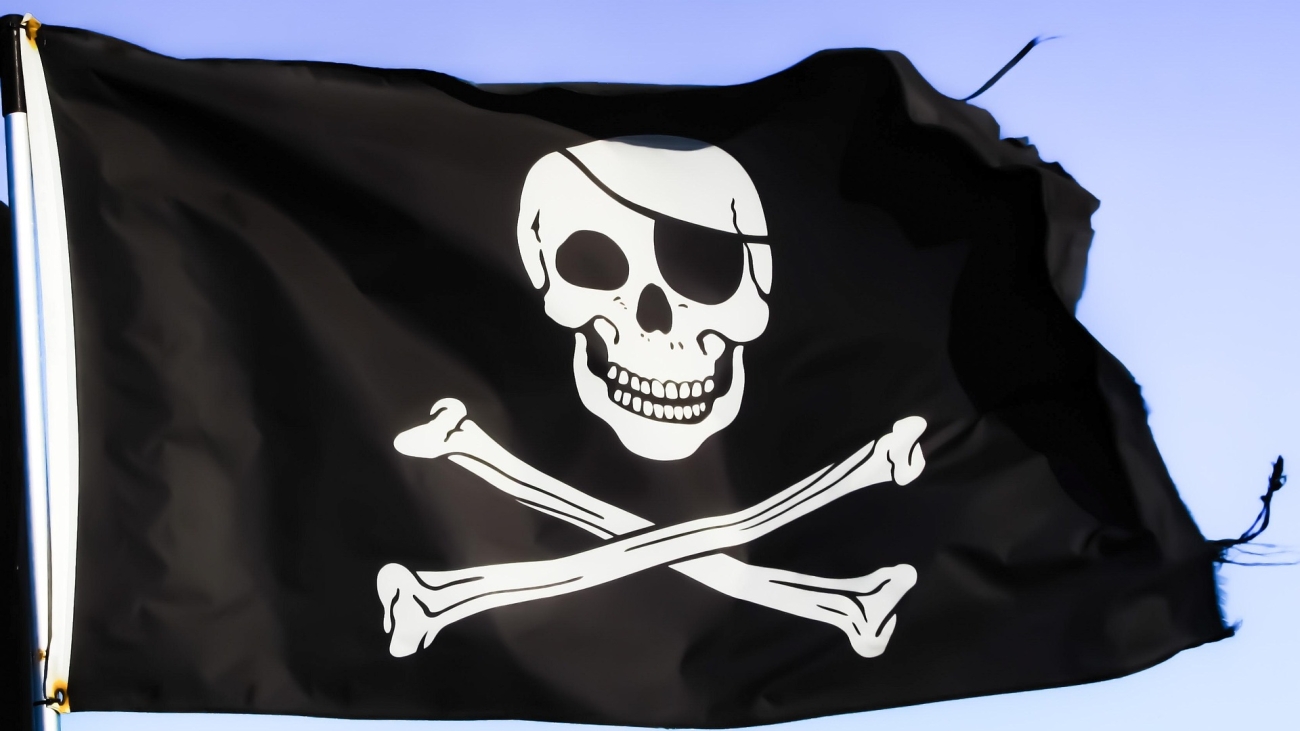
The well-known skull-and-crossbones flag was originally red. However, pirates back then were also flexible: to approach their target ship unnoticed, they sometimes even used that same flag. Their victims thus assumed that a sister ship was approaching and didn’t realize the danger until it was already too late.
During the attack—known as a “prize”—they did not, however, fire cannonballs at the enemy. In the worst-case scenario, that would have sunk the ship—and the prize along with it. So instead, they used metal shot. This destroyed the sail, making the ship easy to capture.
As soon as the pirates had boarded the ship, the crew would usually even hand over the valuable cargo to them voluntarily. At that time, sailors were largely underpaid and poorly fed. As a result, they had no motivation to fight and instead surrendered. This also helped them avoid being marooned on a deserted island by the pirates. That did happen on occasion if the crew of the boarded ship put up strong resistance. Or they were simply thrown overboard.
The Cliché of Pirate Treasure
However, pirates rarely became rich from their work. The merchant ships they attacked were mostly carrying cotton, sugar, or tobacco. Only very rarely did pirates find gold on the ships. The loot was divided up and then quickly squandered. The cliché of“buried treasure” does not correspond to reality.
Of course, there was also resistance against the pirates. One of the first wars against pirates took place in 67 B.C. The Romans’ food supplies were threatened by the pirates, so they struck back—successfully. It didn’t take long, however, for the pirates to regroup and become a threat once again.
Julius Caesar also experienced this firsthand. On his way to Rhodes, he was kidnapped by pirates. They demanded a ransom of 20 talents of silver (about two million euros today)—but the Roman leader considered this amount too small. “I’m worth at least 50 talents,” he is said to have remarked. After this sum reached the pirates nearly 40 days later, he was released. But instead of returning home to Rome, he chartered a fleet, recruited battle-hardened men, and attacked his captors. They ended up on the cross.
Important Battles
But the pirates also waged war against one another. At the end of the 11th century, Muslim and Christian pirates clashed and fought each other in the “Holy War” as part of the Crusades.
Another notable encounter between pirates and well-armed opponents took place in 1801. As early as 1785, the then-young United States had been forced to pay tribute so that its sailors could navigate the oceans unmolested. If the payments were not made, the sailors would, at best, end up in slavery. As the tribute demands rose over the years and soon accounted for 20% of the total national budget, the decision was made to take action.
President Thomas Jefferson refused to pay—and promptly received a declaration of war from the Barbary Sultan. His empire stretched from Morocco to Libya and included Algiers, Tunis, and Tripoli. When the United States’ most powerful warship, the “Philadelphia,” ran aground off the coast of Tripoli due to its weight, it was declared a “gift from Allah” and its crew was enslaved. In response, the United States sent several ships to the region, which ultimately put the Barbary pirates in their place. This battle marked the first deployment of the American elite force,the “Marines.”
They tortured people to live up to their reputation
Pirates were involved in many conflicts and wars. Nevertheless, they usually tried to force their victims to surrender simply by their presence and aggressive behavior. This was because every battle carried the risk of injuries to the crew or damage to the ship. Therefore, they ensured that they were feared at sea by torturing their captives.
The“dance around the mast”was still the most harmless method of torture. During this ordeal, the prisoner was stabbed with sabers and cutlasses and thus forced to “dance” around the mast. The spectacle was accompanied by the pirates’ laughter and violin music. In“woolding,” a rope was placed around the victim’s head and tied at the end with a wooden stick. The stick was then twisted, causing the rope to tighten ever more tightly around the temples. The victim felt as if their eyes were about to pop out of their head.
"Kielholen"was practically a death sentence. The prisoner was tied by his hands and feet to a rope and then dragged along the underside of the ship. He would either drown or die days later from the resulting injuries. Being dragged along the rough hull of the ship inevitably caused cuts, and the resulting infections usually led to death.
If someone was declared the“governor of an island,” that, too, meant certain death. In this form of torture, the prisoner was set adrift in a boat with a bottle of rum, gunpowder, and a pistol loaded with exactly one bullet. He thus had the choice of dying of thirst or shooting himself.
Famous Pirates
In the German-speaking world, Klaus Störtebecker spread fear and terror across the North Sea and the Baltic Sea. He was captured aboard his ship, the “Toller Hund,” in April 1401 after it had been rendered unable to maneuver by a traitor. The pirate was taken to Hamburg aboard the “Bunte Kuh” and beheaded there along with his 72 comrades.
Kaliko Jack was an Englishman who sailed during the Golden Age of Piracy. He wreaked havoc between 1700 and 1720 and made himself immortal with a symbol. He was the first to use the flag featuring a skull and crossbones. The emblem is also known as the “Jolly Roger.”
Although Samuel Bellamy lived to be only 28 years old, he is remembered for his generosity. He is also known asthe “Robin Hood of the Pirates.”He was active between 1695 and 1717.
Nathaniel Gorden died on the gallows in 1820. He was executed under the Pirate Act for slave trading and is known as“the last pirate.”
Of course, there are still pirates today. The best-known ones are probably the Houthi rebels, who repeatedly attack merchant ships in the Red Sea.
By the way, I also have my own Etsy store. Feel free to take a look around.

Sources:
https://www.wissen.de/faktencheck-piraten-zwischen-mythos-und-realitaet
https://www.focus.de/wissen/experts/zerjadtke/grausame-rache-caesar-und-die-piraten_id_4519042.html
https://woffelsbacher-piratenpack.jimdoweb.com/piraten-wissen/strafen-folter-und-hinrichtungen
https://de.thpanorama.com/blog/historia/los-33-piratas-ms-famosos-de-la-historia.html
Photos:
Cover image from PIXABAY. Thanks to:
dimitrisvetsikas1969

Add a Comment